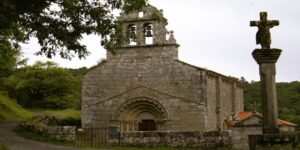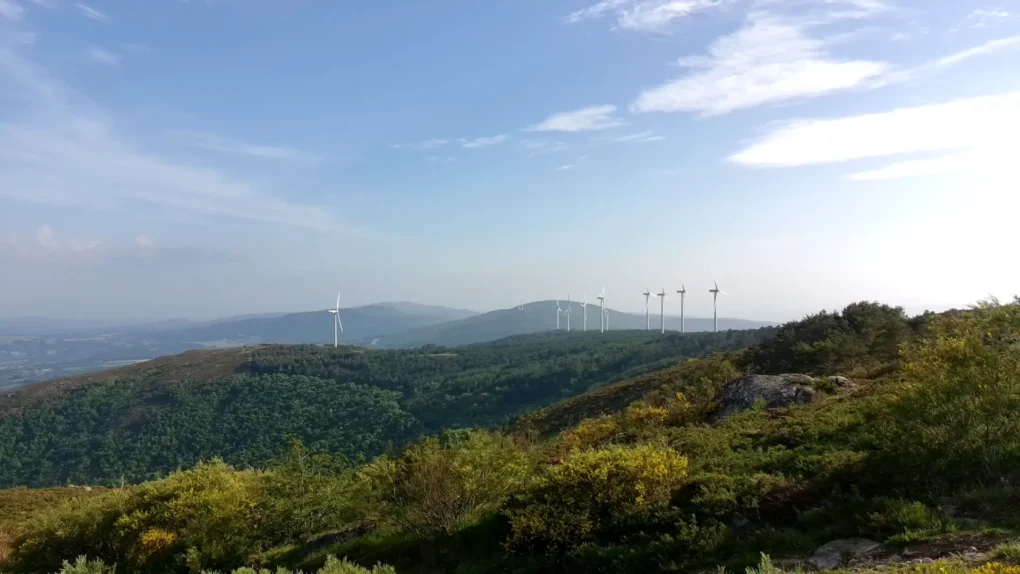
Monte Faro stands on the border between the provinces of Lugo and Pontevedra, between the municipalities of Chantada and Rodeiro, and at over 1,180 metres it is one of the highest points of the Dorsal Gallega, the mountain spine running through inland Galicia. The mountain takes its name from the watch fires once lit here to warn the surrounding area of approaching danger, a role that goes back to before Roman times. At the summit stands the Ermida da Nosa Señora do Faro, a chapel whose origins are said to predate the founding of the Oseira monastery in 1140, built on the site of an earlier, possibly Romanesque and before that pagan temple. The current building dates largely from the seventeenth century. Every year in August and September the mountain draws pilgrims from across Galicia for the romería held in honour of the image of the Virgin.
If you’re heading up, it’s best to avoid the road from Chantada. It’s in poor condition and not pleasant to drive. The route from the other side, via Rodeiro, is in much better shape and gets you to the top with far less hassle. There’s plenty of parking near the summit, and from there it’s a short walk to the highest point by the chapel and the stone cross. On a clear day you can see all four Galician provinces from here, one of the few spots where that’s possible.
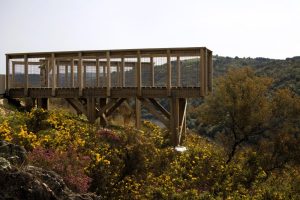
Monte Faro has also become a popular spot to watch the upcoming total solar eclipse on 12 August 2026. Its summit sits within the path of totality, and its height and open western horizon make it one of the better natural viewpoints in the area for the event, which will appear low over the horizon as the sun sets.