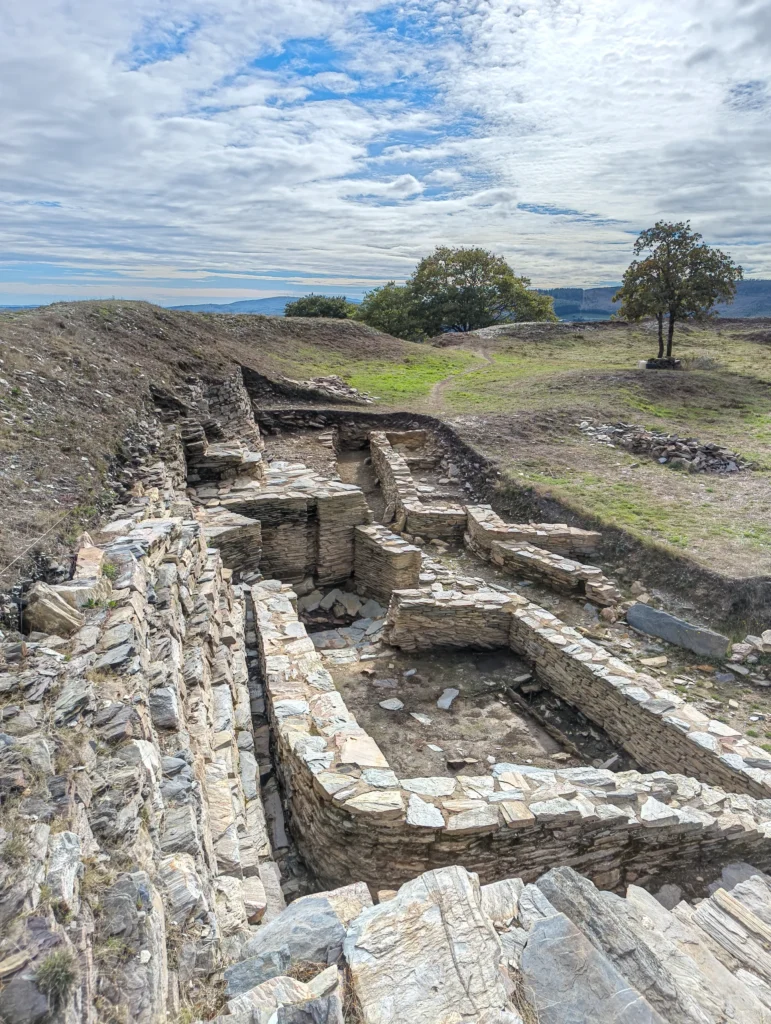
Most people who pass through Castromaior are on their way to somewhere else. The village sits on the final stretch of the Camino Francés in Lugo province, and pilgrims tend to keep their eyes on the path and the distance left to Santiago. But just beside the route, on a gentle hilltop above the Miño valley, lies one of the most interesting archaeological sites in this part of Galicia: the Castro de Castromaior.
What is a castro?
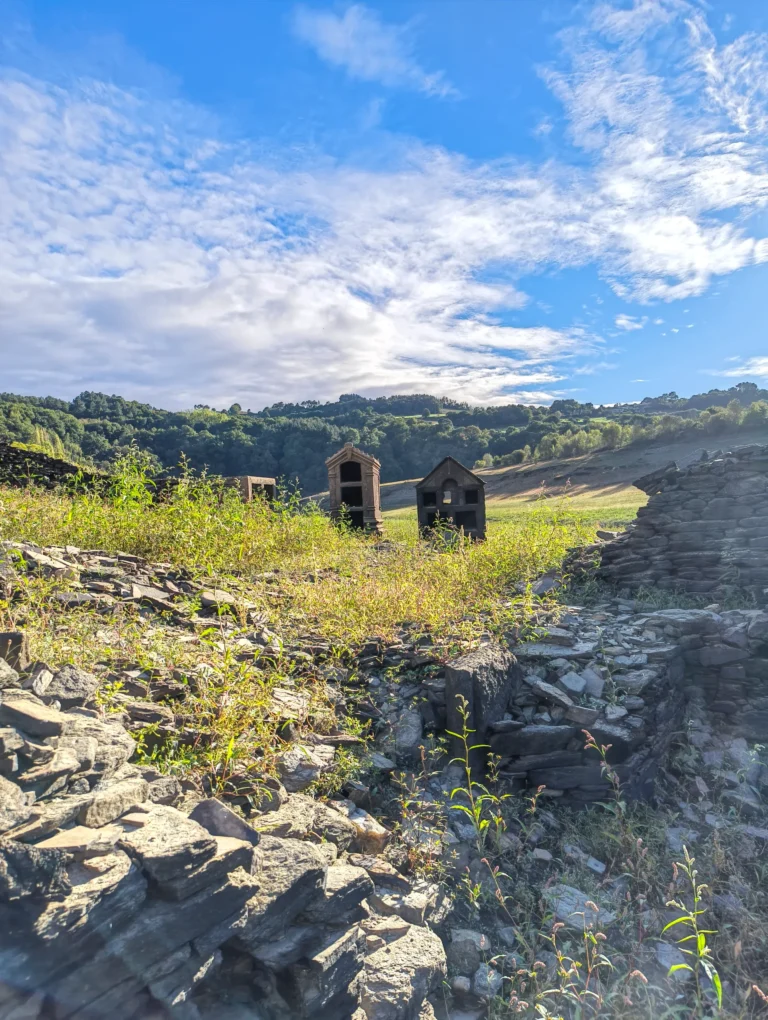
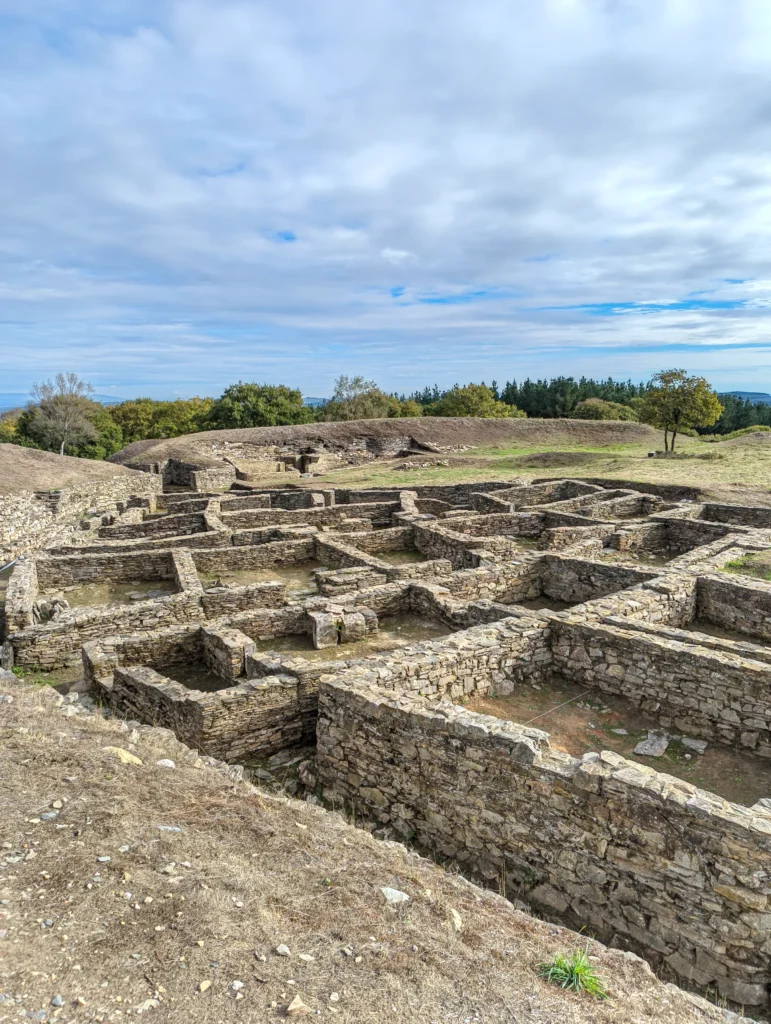
A castro is a fortified settlement from the Iron Age, and they are a defining feature of the Galician landscape. Hundreds of them are scattered across the region, usually on hilltops, usually with circular or oval layouts and stone walls. Many are now hidden under forest and brambles. Castromaior stands out because a large part of it has been excavated and consolidated, so you can actually see how people lived here.
A hill fort that did not have a steep hill
Most castros rely on steep terrain for defence. Castromaior does not have that luxury. It sits on a fairly gentle rise, so its builders compensated with a remarkably elaborate system of defences: ditches, stone walls, earth embankments and palisades, especially around the entrance. The stone wall that encloses the settlement is a mix of slabs and rubble stone and runs for roughly 316 metres around the site.
That entrance system is what makes Castromaior unusual. Rather than a simple gate in a wall, the approach was designed as a series of obstacles, and researchers have even produced a hypothetical reconstruction of how one of the access routes may have looked.
Streets, houses and neighbourhoods
Inside the walls, the excavated area shows houses with straight, regular walls grouped into small neighbourhoods, linked by streets. Archaeologists have also documented pavements and hearths. It gives you a much clearer sense of daily life than the scattered stones you find at many other castros.
The settlement was inhabited from around the 4th century BC and was abandoned around the 1st century AD, in the Roman period. In 2010 it was declared a Bien de Interés Cultural, the highest level of heritage protection in Spain.
Restored in recent years
Between 2019 and 2021 the Xunta de Galicia carried out a major clean-up and consolidation of the site, covering around 800 square metres. The work included stabilising walls, pavements, hearths and streets, as well as the main entrance and the defensive wall. The result is a site that is much easier to read and safer to visit than it was before.
Views over the Miño
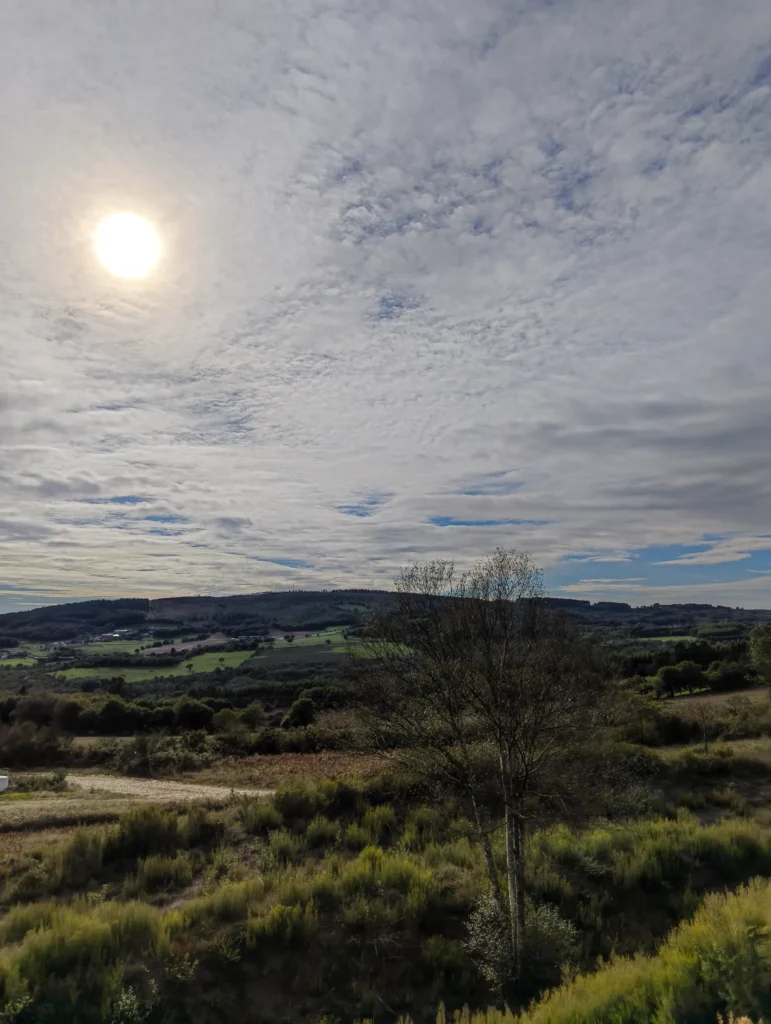
The hill looks out over the right bank of the Miño, and on a clear day the panorama is a big part of the appeal. For anyone interested in the Ribeira Sacra area, it also helps to understand the landscape: this has been a place of settlement and passage for well over two thousand years.
Visiting Castromaior
- Where: Castromaior, in the municipality of Portomarín, province of Lugo
- Cost: The site is free to visit
- On the Camino: It lies right beside the Camino Francés, so it makes an easy stop if you are walking this stage
- Combine it with: The small Romanesque church of Santa María de Castromaior in the village, which holds a Romanesque Virgin and a 16th century altarpiece, and the town of Portomarín itself, famous for its relocated monuments
- Tips: Wear proper footwear, as the ground can be uneven and muddy after rain, and bring water, because there are no services at the site itself as far as we know
Why it is worth a stop
Castromaior will not give you a polished visitor centre or a long tour. What it offers is quiet, space and a rare chance to stand inside a settlement that is more than two thousand years old, with the Galician hills rolling away in every direction. If you are walking the Camino or exploring the Ribeira Sacra area, give it an hour. We think you will be glad you did.