
Old Portomarín Emerges: Ruins Beneath a Drained Reservoir
Most pilgrims who walk into Portomarín on the Camino Francés never realise that the village they are entering is not the original one. The old Portomarín lies beneath the Miño, and after this hot summer, part of it has come back into view.
What We Saw
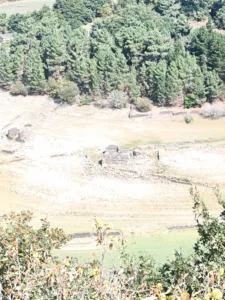
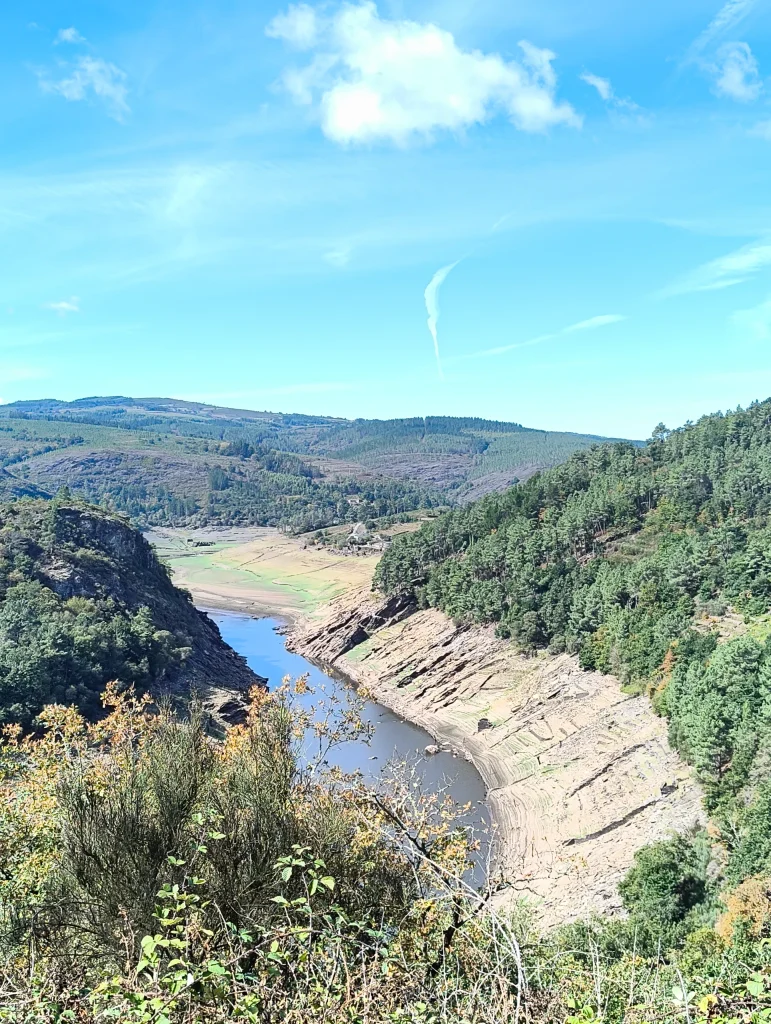
When we arrived, there was hardly any water left. Where the reservoir normally lies, we found ruins: low stone walls that once marked the edges of plots of land, now standing in the open air again. Walking along them, it is easy to imagine fields, gardens and the paths between them. It was quiet, and strangely intimate, like seeing a place that was never meant to be seen again.
Why the Old Village Is Underwater
In the early 1960s, the Belesar dam turned this stretch of the Miño into a reservoir. Old Portomarín, a medieval stop on the pilgrim route, was flooded, and a new village was built higher up the hill. Not everything was lost. The Romanesque fortress church of San Nicolás was taken apart and rebuilt in the new village, with its stones numbered so they could be put back in the right order. If you look closely at the walls, you can still find some of those numbers.
When Does the Old Village Appear?
The ruins only show when the reservoir drops low enough. That depends on a dry, hot summer and on how much water is released for electricity and river management. It is not something you can plan with certainty, so if you want to see it, check the water level before you go.
Other Villages Under Water in Galicia
Portomarín is not the only village in Galicia that lies under a reservoir. Aceredo in Ourense is probably the best known, and it also reappears when the water is low. The reservoirs in the Miño and Sil valleys have shaped much of the landscape we know today, including the canyons of the Ribeira Sacra.