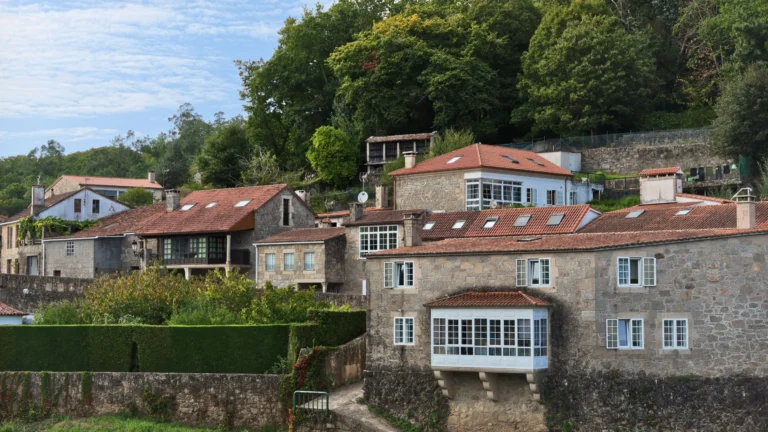

Of all the bureaucratic steps involved in moving to Spain, empadronamiento is probably the one that gets the least attention abroad and causes the most confusion once you actually arrive. It sounds like a minor formality, registering your address with the local town hall, but in practice it sits underneath almost everything else you will need to do here, from healthcare to schooling to renewing your TIE. Skip it, or delay it, and you will find doors closing that you did not expect to be locked in the first place.
The padrón municipal is, at its simplest, a register kept by every ayuntamiento in Spain of everyone who lives within its boundaries. It has nothing to do with nationality, residency status, or tax obligations in the way people often assume. A Spanish citizen has to register at their town hall just as much as a foreigner does, and in fact the padrón predates the modern immigration system entirely. Its original purpose was administrative and statistical: municipalities need to know how many people actually live there in order to receive the correct level of funding from central government for schools, healthcare centres, and public services. A village with 200 registered residents receives a different budget allocation than one with 800, regardless of how many holiday homes sit empty most of the year. This is why small Galician villages, ours included, care about empadronamiento far more than the paperwork itself would suggest. Every registered resident is, quite literally, worth something to the municipality.
For newcomers, though, the padrón has become something else entirely: the single document that unlocks almost every other piece of the puzzle. You typically need your certificado de empadronamiento, or at minimum proof that you have applied for one, before you can register with the public healthcare system, enrol children in the local school, apply for or renew a TIE, register a vehicle with Galician plates, or even open certain types of bank accounts. Some of these requirements are written into national regulations, others are simply how individual offices have chosen to interpret the rules, which means the exact list of what you will be asked for can vary slightly depending on which office you walk into. What does not vary is the basic principle: prove where you live first, and the rest follows.
Getting registered is, on paper, a simple process, though the exact requirements differ from one ayuntamiento to another, sometimes noticeably so between a small rural municipality and a larger town. In general you will need your passport or national ID, your NIE if you already have one, and proof that you actually live at the address you are claiming. This last part is where things get interesting, and where a lot of people get stuck. If you own the property, a copy of the escritura, the deed of purchase, is usually enough. If you rent, you will typically need the rental contract along with either a recent utility bill in your name or a signed authorisation from the landlord confirming that you live there. Some smaller municipalities, particularly in rural areas where informal arrangements between neighbours are common, will accept a simple signed statement from the property owner instead of a full set of documents, though you should not assume this without asking directly, since practice varies enormously from office to office.
It is worth appearing in person if at all possible, particularly the first time. Appointment systems, where they exist at all, tend to be informal in smaller towns, sometimes nothing more than a phone call or a walk-in during opening hours, while larger towns and cities increasingly require booking through their online cita previa systems, which can have long waiting times of several weeks depending on demand. This is one area where the difference between rural and urban Galicia becomes very obvious very quickly. In a small village town hall you might be registered within twenty minutes on the same morning you walk in. In a city, the appointment itself might be the bottleneck long before the actual paperwork.
One detail that catches many newcomers off guard is that empadronamiento is not a one-time event. The register needs to be kept current, and in most municipalities you are expected to update it whenever you move, even within the same town. There is also a renewal requirement for non-EU nationals without permanent residency, whose registration needs to be renewed periodically, generally every two years, or it can be cancelled automatically. EU citizens and those with permanent residency generally do not face this renewal requirement, but the rules have shifted before and are worth checking directly with your ayuntamiento rather than relying on general online guidance, since interpretation at the municipal level varies more than people expect for something that sounds so standardised.
There is also a slightly less obvious consequence of registering that is worth knowing about in advance: your padrón entry becomes the official record of your household composition and, in some contexts, is used to determine which polling station you vote at in local elections, which primary care doctor you are assigned to, and which school catchment area applies to your children. In a small village this can matter in very practical ways. Local doctors’ surgeries and rural schools often serve a small number of villages together, and the exact boundary of who is registered where can genuinely affect appointment availability and class sizes. It is one of those pieces of paperwork that seems purely bureaucratic from a distance but turns out to shape daily life once you are actually living somewhere.
For anyone still weighing up when to prioritise this step during a move, our honest advice is: as early as possible, ideally within the first few weeks of arriving, even before some of the larger and more time-consuming procedures like the TIE application are fully underway. Several of those other processes will ask for your empadronamiento certificate as supporting evidence, and requesting the certificate itself, once you are registered, is usually fast and can often be done at the same visit or shortly afterward, sometimes even online once you are already in the system. Trying to register late, after you have already been asked for the certificate elsewhere and had to explain its absence, tends to create a domino effect of delayed appointments that is entirely avoidable.
A final point that is easy to overlook: because the padrón is managed at the municipal level rather than nationally, there is no single central authority to appeal to if a particular office asks for something unusual or interprets the requirements more strictly than a neighbouring town. Patience and a willingness to ask exactly what is needed, in person, at your specific ayuntamiento, will save far more time than trying to prepare a universal document checklist in advance. Rural Galicia, in our experience, tends to be considerably more relaxed and personal about this process than larger cities, but relaxed does not mean lenient about the underlying requirement. Registering properly, and keeping that registration current, remains one of the quieter but more consequential steps in actually settling somewhere in Galicia.