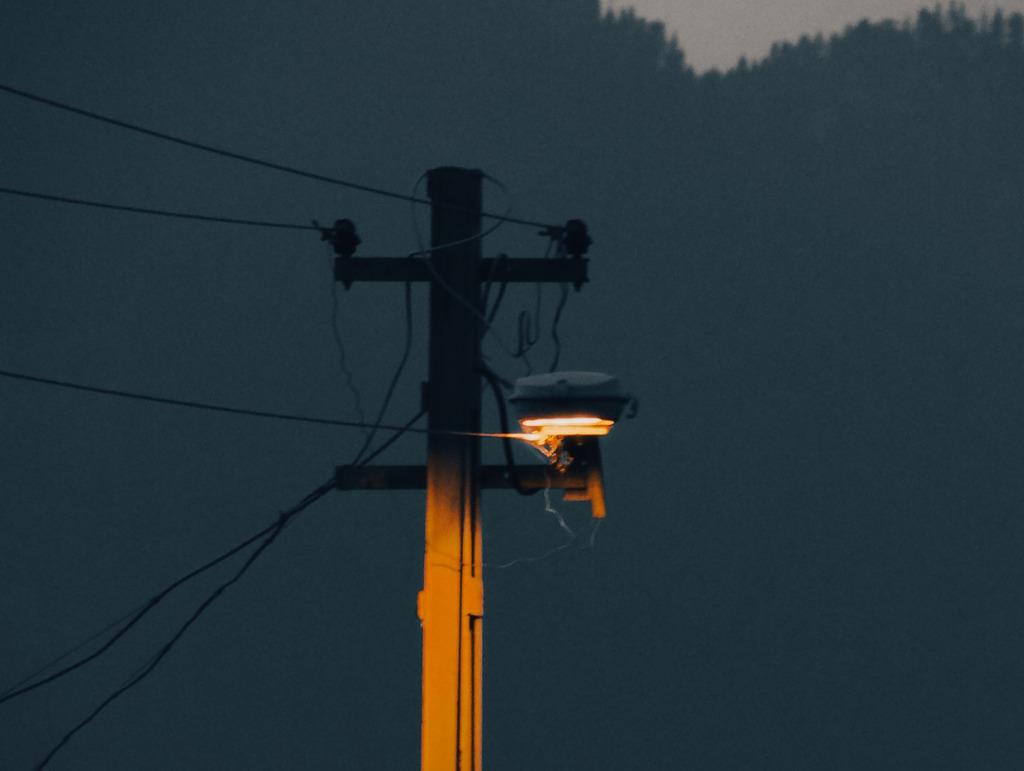
We had been in our house near the Miño for barely a few weeks when the lights first went out. A storm had rolled through that evening, the kind with real wind behind it, and partway through cooking dinner the power simply gave up. We spent a while in the dark trying to remember where we had put the candles.
In cities, a power cut is an event. In rural Lugo province, it is closer to weather. It happens, it usually does not last long, and it tends to follow a pattern rather than come out of nowhere.
The infrastructure here reflects the geography as much as anything else. Ribeira Sacra is a landscape of steep river valleys, scattered hamlets, and lines that run a long way between villages to reach relatively few homes. That combination means the grid is more exposed to wind, falling branches, and ageing equipment than it would be in a denser area, and it means that when something does fail, a repair crew may have a fair distance to travel before they even reach the fault. Summer storms, the odd heavy snow in winter, and simple wear on rural lines account for most of what we have experienced. None of it has been dramatic. Most cuts last somewhere between a few minutes and a few hours, and they tend to cluster around bad weather rather than appearing at random.
It is worth being honest, though, that rural areas do not always sit at the front of the queue when something bigger goes wrong. The nationwide blackout that hit Spain and Portugal in April 2025 is the clearest example. Galicia was actually among the quicker regions to see power return once the grid began coming back online, but reports from that day made clear that rural pockets across the country waited considerably longer than cities did, precisely because of the same distance and infrastructure factors we notice on an ordinary stormy evening. It was a reminder that whatever we get used to as normal here, an outage can occasionally last far longer than the usual half hour.
What surprised us most was not the darkness itself but which small conveniences quietly depend on electricity out here. Our water comes from a private spring, and the pump that brings it into the house needs power to run, so a long cut means thinking ahead about water the same way we think about food. Our fridge and freezer are the obvious concern, especially in summer when a few hours without cooling can mean deciding what to eat first rather than last. The router goes down with everything else, which matters more than it once did now that so much of daily life, from banking to simply checking in with family back in the Netherlands, assumes a working connection. Our phones keep working on mobile signal regardless, and we keep a couple of powerbanks charged specifically so a longer cut does not also mean losing contact with the outside world. None of this is unique to us, and none of it is really a hardship, but it does mean building small habits: keeping torches where you can find them without a phone light, filling a few bottles of water when a storm is forecast, and not leaving the freezer as the only place where anything important is stored.
Over the past months we have spent a fair amount of time looking into ways to soften the effect of the occasional longer cut, partly out of practicality and partly because we are the sort of people who like a project. Battery lanterns took care of the light. For anything more serious, we have been comparing small portable power stations that can run a fridge or router for a stretch, alongside simple solar panel kits that could keep such a unit topped up between cuts rather than only after them. We have not settled on a final setup yet, and we will write about whatever we choose once it is actually installed and tested through a real outage rather than a showroom demonstration, but the research alone has been reassuring. The gap between doing nothing and having a proper off grid backup is smaller and cheaper than we expected.
None of this changes our answer when people ask whether power cuts should put them off moving to rural Galicia. They should not. What they should do is drop the assumption that electricity here works exactly the way it does in Amsterdam or Madrid, and pack that assumption away with the other ideas about rural life that turn out to need adjusting once you actually live it. A candle within reach, a torch that does not depend on a phone, and a rough sense of how full the water bottles are will cover almost everything that actually happens. The rest, the once or twice a year longer cut, is simply the trade you make for the quiet, the space, and the view over the river that brought you here in the first place.