

Galician Shop Hours and Public Holidays
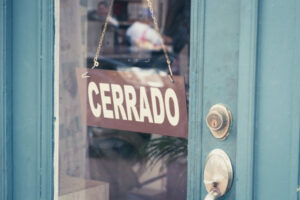
We’ve lost count of how many times we’ve walked up to a shop, pharmacy, or office in Galicia only to find the shutters down. Not because it was a Sunday. Not because it was siesta time. But because it was a public holiday we had no idea existed.
After enough closed doors, we finally did the obvious thing: we put every Galician public holiday into our calendar, a year ahead. If you’re new here, or planning to move, this might save you the same frustration.
The basics: shop hours in Galicia
Galicia mostly follows the standard Spanish retail rhythm, though it’s a bit less rigid than in the south. Most shops are open from around 9:30am to 2pm, then again from 5pm to 8pm, Monday to Saturday, with the early afternoon closed for the midday break. Supermarkets and the bigger chains tend to skip this and stay open straight through the day.
A few things worth knowing if you’re used to Dutch or Belgian shop hours:
- Sunday is genuinely quiet. Sunday is a limited trading day across much of Spain, and in smaller towns many shops close entirely. Don’t count on it for errands.
- Saturday afternoons can be hit or miss, especially for small, independent shops.
- The midday closure is real, even if “siesta” suggests everyone’s asleep. It’s more lunch-and-family-time than actual napping, but the shop is shut either way.
- Tourist areas are the exception. Coastal towns in summer often keep longer, uninterrupted hours. Rural inland villages, less so.
None of this was the real problem for us, though. We’d already adjusted to the rhythm. What actually got us was the calendar.
The real surprise: how many public holidays there are
Spain allows up to fourteen official public holidays a year, set partly by the national government, partly by the region, and partly by the local town hall. Galicia uses its full allowance: national holidays, a handful that are specific to Galicia, and then two extra local holidays per municipality that vary from town to town.
That last part is the trap. A holiday that closes everything in your village might mean nothing at all one town over. There’s no single calendar that covers it, because it genuinely doesn’t exist at a single level. You need the national list, the Galician regional list, and your own town hall’s local dates, layered on top of each other.
Galicia’s regional public holidays for 2026
On top of the national Spanish holidays, Galicia observes:
- 19 March – San José (substituting for a holiday that fell on a Sunday)
- 2–3 April – Maundy Thursday and Good Friday
- 24 June – San Xoán (St. John’s Day), a Galician regional holiday
- 25 July – Día Nacional de Galicia / Santiago Apóstol
And the national holidays that apply across all of Spain, including Galicia: 1 January, 6 January, 1 May, 15 August, 12 October, 8 December, and 25 December.
That’s twelve days already. The remaining two are local ones your specific town hall decides, often tied to the patron saint’s day or a town fiesta. Ours, for instance, is nowhere on the regional list — we only found out by asking around and checking the ayuntamiento’s notice board.
What we actually did about it
We stopped relying on memory or on stumbling across a notice in the shop window. Instead:
- We looked up our own town’s two local holiday dates directly with the ayuntamiento (town hall), since these genuinely aren’t published anywhere centralized.
- We added all of it — national, regional, and local — to our shared digital calendar, a full year out, with a reminder a few days before each one.
- We treat any errand involving a town hall, bank, or notary the same way: assume it’s closed unless we’ve checked.
It’s a small, slightly boring fix, but it’s worked. No more standing in front of a locked pharmacy wondering if it’s us or the universe.
The bigger picture
This is one of those things nobody mentions when they talk about “adapting to life in Spain.” It’s not the big cultural differences that trip you up day to day — it’s the small administrative ones. A public holiday calendar that’s split across three layers of government is a very Spanish kind of complexity, and once you know that, it stops being annoying and just becomes one more thing you plan around.
If you’re moving to Galicia, do this early. It costs ten minutes and saves you a surprising number of wasted trips.