
Why Galician Bread Is So Good
We are Dutch, and if there is one thing the Dutch take seriously, it is bread. We grew up with a loaf on the counter every single day, sliced thin, spread with something, eaten at breakfast and lunch without much thought given to it. So when we moved to Galicia, bread was not something we expected to notice. It was just going to be bread, the same background item it had always been.
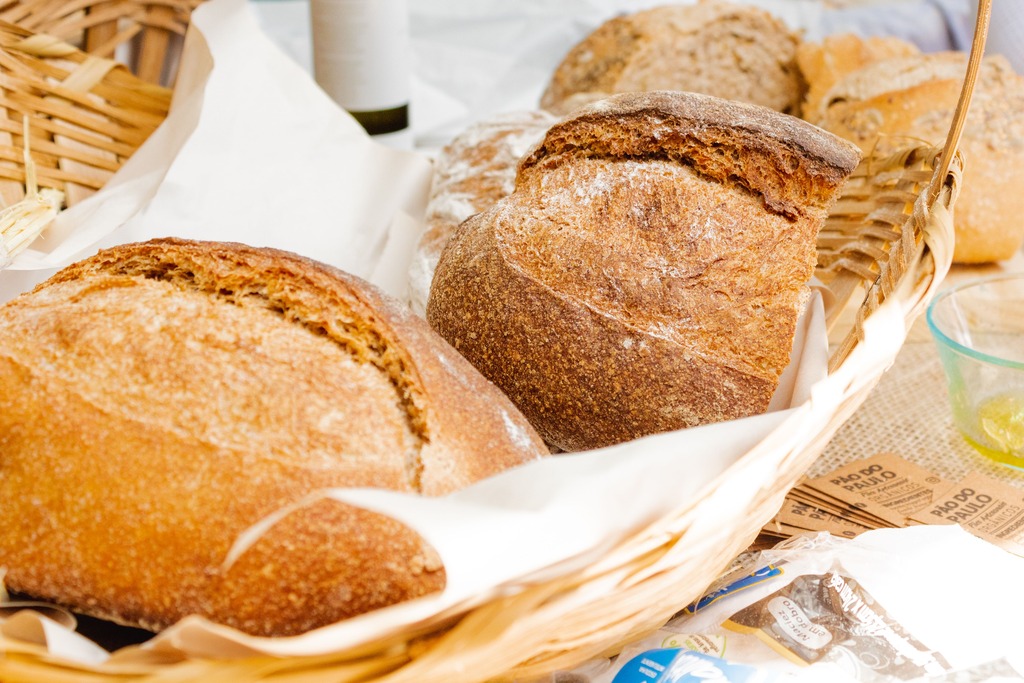
It took about a week for us to realise we were wrong. The first loaf we bought at the panadería in the nearest town had a crust that cracked audibly when we broke it open, a dense, almost custardy crumb underneath, and a flavour that was slightly sour and deeply wheaty at the same time. We finished it in a day, which almost never happened with bread back home. We assumed we had gotten lucky, that the bakery was simply good. But it happened again at the next bakery, and the one after that, and eventually we stopped assuming it was luck and started asking why.
The answer, it turns out, has a name, a legal status, and a village behind it. A lot of the bread sold in this part of Galicia is either Pan de Cea itself or made in its style, and Pan de Cea is not just a regional specialty, it is a protected designation. Since 2005 it has carried European Protected Geographical Indication status, and it was the very first bread in Europe to receive this kind of protection. For two people who spent a fair amount of time in the Netherlands reading ingredient labels out of habit, this detail delighted us more than it probably should have.
The village responsible for all this is San Cristovo de Cea, tucked into the northwest of Ourense province, not far from where we live. Locals call it la villa del buen pan, the town of good bread, and the name is not marketing. Baking is the main economic activity there, and has been for a very long time. The tradition traces back to the Cistercian monks of the nearby Monasterio de Santa María la Real de Oseira, who took up milling and baking themselves and turned Cea into the bread supplier for the whole surrounding area. The earliest written references to the bakers of Cea date to the final decades of the thirteenth century, which means people have been making this bread, in roughly the same way, for more than seven hundred years.
What actually makes it protected is oddly specific once you read the rules. The dough can only contain wheat flour, water, salt, and a starter carried over from a previous batch, nothing else. It has to be kneaded in stages by hand, following the traditional method of the area. It is baked in granite stone ovens, heated beforehand with wood, and only wood, never gas or electricity, and fermentation chambers are explicitly banned. The loaves are scored down the middle before baking, a cut called the fenda, and if the baker gets the timing right, the bread tears open along that line in the oven and produces the layer locals call the febra, which is considered the mark of a properly made loaf. The whole process, from kneading to cooling, takes something like eight or nine hours, almost none of it automated beyond the mixer itself.
Every July since 1991, Cea holds the Fiesta de Exaltación del Pan de Cea, a weekend built entirely around this loaf, with tastings, traditional music, and enough smoke from the wood ovens to smell from a distance. We have not made it to the festival yet, but it is now firmly on our list, not as a tourist errand but because we have started to care about this bread in a way we did not expect to.
There is something quietly satisfying about moving to a new country as self-declared bread snobs and discovering that the local product genuinely earns the reputation, backed by seven centuries of consistency and a legal document specifying exactly which utensils the bakers are and are not allowed to use. We buy our bread differently now. We ask where it is from. More often than not lately, the answer is Cea.