

Ribeira Sacra: Five Microclimates in a Wine
Hidden in the heart of Galicia, in northwestern Spain, lies one of the country’s most spectacular wine regions: Ribeira Sacra. Famous for its dramatic terraced vineyards carved into the steep slopes of the Sil and Miño river valleys, breathtaking landscapes, and centuries-old winemaking traditions, this region is unlike any other. Yet its true secret is something you cannot immediately see—it is found in the remarkable combination of five distinct microclimates that shape every vineyard and every bottle.
These climatic influences give Ribeira Sacra wines their complexity, elegance, and unmistakable sense of place.
Heroic Viticulture
Before exploring the microclimates, it is impossible not to mention what makes viticulture here so extraordinary.
The vineyards cling to slopes that often exceed 60% gradients, making mechanization nearly impossible. Every stage of vineyard management—from pruning to harvesting—is carried out by hand. For this reason, Ribeira Sacra is internationally recognized as an example of heroic viticulture, where winegrowing demands exceptional skill, dedication, and physical effort.
Many of these stone terraces date back centuries and were first cultivated by Roman settlers before being expanded and maintained by medieval monasteries. Today, they continue to define both the landscape and the identity of the region.
Five Microclimates, One Extraordinary Wine Region
Although Ribeira Sacra appears relatively compact on a map, it is home to an impressive diversity of climatic conditions. The interaction between the Atlantic Ocean, Mediterranean warmth, mountain elevations, river valleys, and countless local variations creates five distinct microclimates, each contributing its own character to the wines.
1. Atlantic Influence
The northwestern parts of Ribeira Sacra experience the cooling influence of the Atlantic Ocean. Temperatures remain moderate throughout the growing season, humidity is relatively high, and rainfall is more frequent than in much of inland Spain.
These cooler conditions allow grapes to ripen slowly while preserving natural acidity.
In the glass, this translates into vibrant wines with bright red fruit aromas, delicate floral notes such as violets, lively freshness, and remarkable elegance. The Mencía grape, in particular, displays its most refined and aromatic personality under these conditions.
2. Mediterranean Influence
Moving deeper into the Sil Valley, Mediterranean conditions become increasingly apparent. Summers are warmer and drier, allowing grapes to achieve greater ripeness and concentration.
The resulting wines are fuller-bodied, with richer flavors of blackberry, plum, and dark cherry, complemented by hints of Mediterranean herbs and spices. Tannins become softer, textures rounder, and the wines often show greater richness while maintaining the freshness that defines Ribeira Sacra.
3. Mountain Climate
Many vineyards are planted at higher elevations, where significant temperature differences between warm days and cool nights create ideal growing conditions.
During the day, sunshine promotes ripening and flavor development. At night, cooler temperatures slow down respiration in the grapes, preserving acidity and aromatic intensity.
These vineyards produce wines with remarkable balance—concentrated fruit supported by crisp acidity, floral aromas, wild herbs, and a long, mineral finish.
4. River Climate
The Sil and Miño rivers play an essential role in regulating vineyard temperatures. Throughout the day, the water absorbs heat and gradually releases it during the cooler evenings, reducing temperature extremes.
This natural moderation allows grapes to ripen steadily and evenly.
The wines produced under this influence tend to be exceptionally harmonious, combining soft tannins, refined structure, fresh fruit, and elegant minerality into beautifully balanced expressions of the region.
5. Local Valley Microclimates
Perhaps the most fascinating aspect of Ribeira Sacra is the countless small valleys and hillside vineyards, each with its own unique environmental conditions.
Differences in elevation, sun exposure, slope orientation, wind patterns, and soil composition can change dramatically within just a few hundred meters.
As a result, two neighboring vineyards planted with the same grape variety may produce remarkably different wines. One may be light, floral, and delicate, while another expresses greater power, spice, and concentration.
It is this extraordinary diversity that gives Ribeira Sacra such depth and individuality.
You Can Taste the Landscape
What truly sets Ribeira Sacra apart is how these five climatic influences come together in every bottle.
Many producers own multiple tiny vineyard parcels spread across different hillsides and elevations. By carefully blending grapes from these distinct microclimates, they create wines that are layered, complex, and full of character.
The region’s signature grape, Mencía, beautifully reflects these variations. Depending on its origin, the wines may display bright cherry and raspberry, darker blackberry fruit, violets, fresh herbs, graphite, wet stone, and an unmistakable mineral freshness.
White varieties such as Godello, Treixadura, and Albariño also benefit from these diverse growing conditions, producing wines with citrus aromas, white stone fruit, floral notes, vibrant acidity, and a distinctive mineral finish.
A Hidden Gem Worth Discovering
Despite its growing international reputation, Ribeira Sacra remains one of Spain’s best-kept wine secrets. Small family-owned wineries continue to cultivate ancient vineyards using traditional methods while embracing modern precision in the cellar.
For visitors, the experience extends far beyond wine. Towering canyon walls, centuries-old monasteries, winding river valleys, and dramatic vineyard terraces create one of Europe’s most breathtaking wine landscapes.
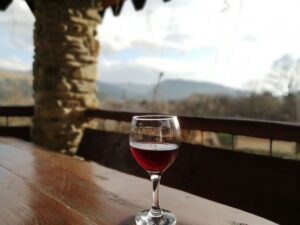
Standing among these steep vineyards with a glass of Mencía in hand, it becomes clear that Ribeira Sacra is far more than a wine region—it is a living expression of nature, history, and craftsmanship.
Every bottle tells the story of its landscape. And it is the interplay of five remarkable microclimates that gives Ribeira Sacra wines their elegance, freshness, complexity, and unmistakable identity.