Galicia’s folklore is crowded with supernatural figures. We’ve already written about the meigas, the wise women and healers who walk the line between blessing and curse, and about the trasno, the mischievous house spirit with a hole through his left hand. But there’s another figure that comes up again and again in conversations with older neighbours here in Ribeira Sacra: the lobishome, Galicia’s own version of the werewolf.
What makes the lobishome different from the werewolves of other traditions is the reason for the curse. This isn’t a monster created by a bite, a pact, or a moral failing. It’s simply the result of being born in the wrong order.
The Curse of the Seventh Son
At the heart of the legend is a very specific rule: the seventh consecutive son in a family, with no daughters born in between, is destined to become a lobishome. There’s no crime involved, no broken promise, no encounter with something dark in the forest. The curse is assigned at birth, purely by the order in which children arrive.
Because the curse has nothing to do with the person’s own choices, some communities developed ways to try to prevent or soften it. In certain versions of the story, the curse could be avoided if the seventh son became godfather to another family’s seventh child, effectively passing the supernatural weight elsewhere. Other tellings describe rituals performed by the parents around the time of birth, meant to head off the transformation before it ever had the chance to take hold.
The Transformation
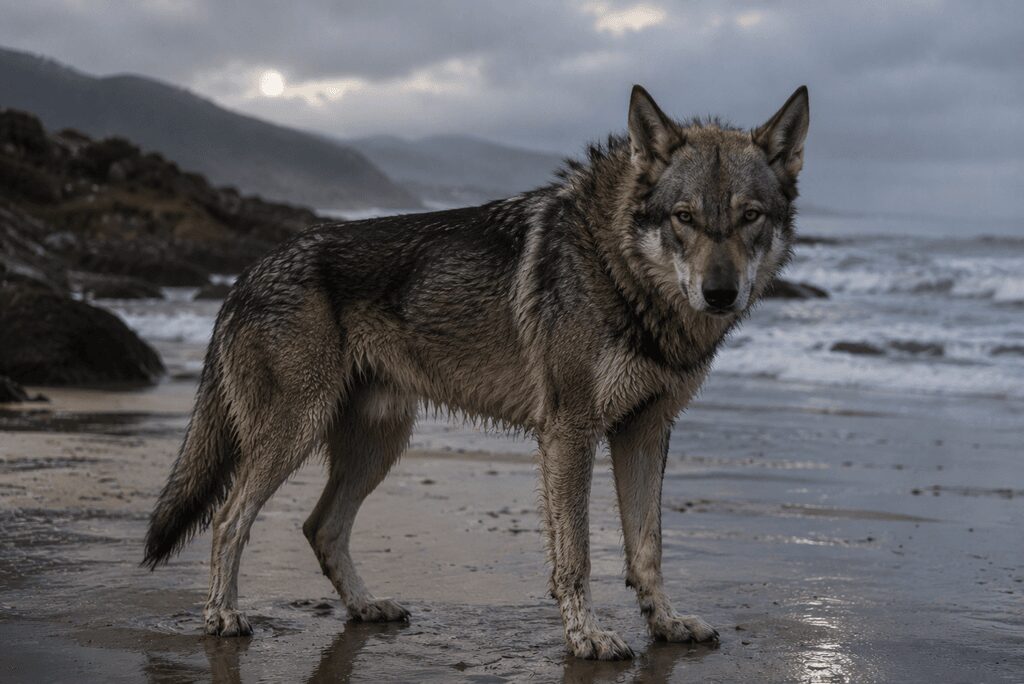
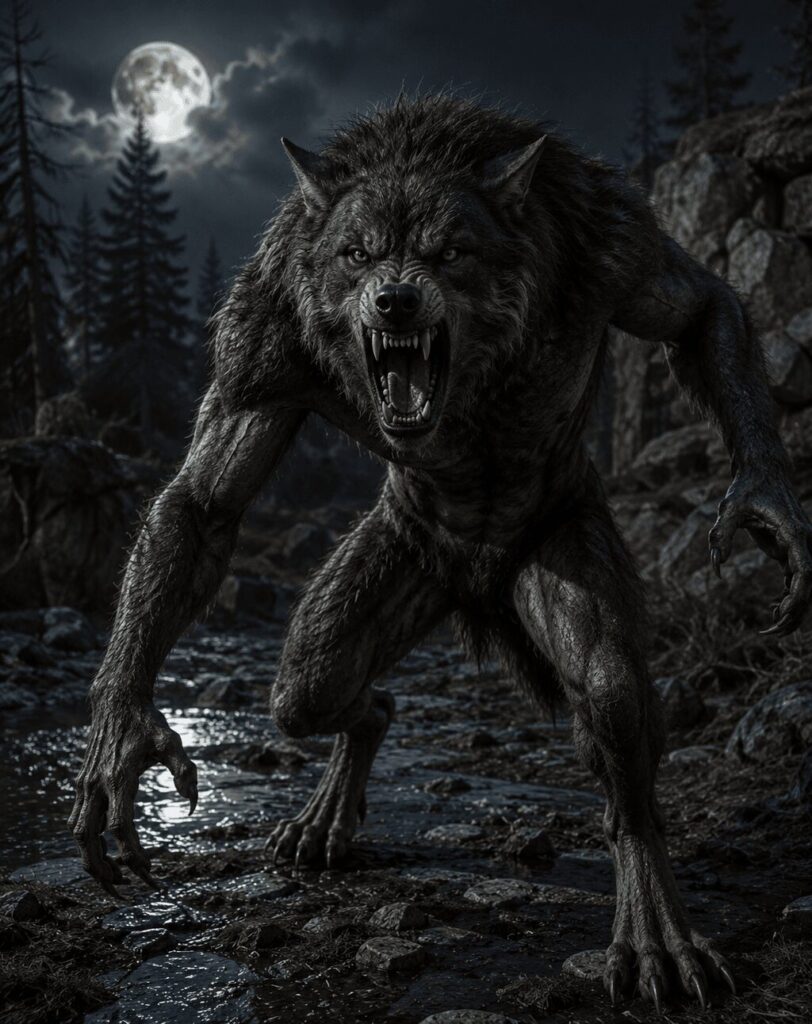
According to the legend, the change usually happens on Friday nights, often timed to the full moon. The man leaves the house in secret, and the transformation itself is described as violent enough to tear his clothing. What emerges is a wolf-like creature, sometimes described as fully a wolf, sometimes as something in between man and animal, that roams the hills and forests until dawn.
When morning comes, he returns to his human form. Most versions of the story agree on one detail: he wakes up exhausted, with no clear memory of what happened during the night. This detail does a lot of narrative work. It turns the lobishome into someone who suffers his own condition rather than someone who revels in it.
Breaking the Curse
Folklore across Galicia offers a fairly consistent method for freeing a lobishome from his fate: wounding him with silver, or with a blessed object, while he’s still in wolf form. Draw blood, and the curse is broken for good.
The overlap between silver and Catholic symbolism here is worth noting. Silver as a purifying material shows up in werewolf folklore across much of Europe, but in Galicia it sits comfortably alongside crosses and holy water, a good example of how thoroughly Catholic and pre-Christian belief systems have blended here over the centuries.
One recurring motif in village storytelling adds a practical, almost forensic detail to all this: family members recognising the lobishome the next morning by wounds still visible on his very human body, matching whatever damage was done to the wolf the night before.
A Regional Variation: The Seventh Daughter
In parts of Galicia, and across the border in northern Portugal, the same birth-order logic applies to daughters. A seventh consecutive daughter, again with no sons in between, was said to carry a parallel curse. But rather than becoming a wolf, she becomes something closer to a witch, connecting this legend directly back to the broader meiga mythology we’ve written about before. It’s a good example of how these folk traditions cross-reference each other rather than existing in isolation.
How the Lobishome Differs From Other Werewolves
Compare the lobishome to the werewolf traditions most people already know, and the difference in tone is clear. In much of Central and Northern European folklore, the werewolf is typically a willing or at least complicit monster, someone infected, cursed for wrongdoing, or drawn to violence. The lobishome doesn’t fit that mould. He’s a victim of circumstance, cursed by something as arbitrary as his position among his siblings.
That framing puts him in good company within Galician folklore more broadly. The mouras, the enchanted beings said to live beneath ancient burial mounds and ruins, are often described as trapped by a spell rather than inherently evil. There’s a pattern here worth noticing: Galician supernatural figures are frequently sympathetic, bound by forces outside their control, rather than straightforwardly villainous.
Why This Legend Still Feels Distinctly Galician
Stories like the lobishome are a useful reminder of how different Galicia’s folklore feels from the rest of Spain. The Celtic roots, the centuries of relative isolation in these valleys and hills, and the layering of Catholic ritual over much older beliefs all show up in a single legend about a cursed seventh son. It’s tragic more than frightening, and it says something about how this region has always handled the things it can’t explain: not by banishing them, but by weaving them into the family, the village, and the landscape itself.