
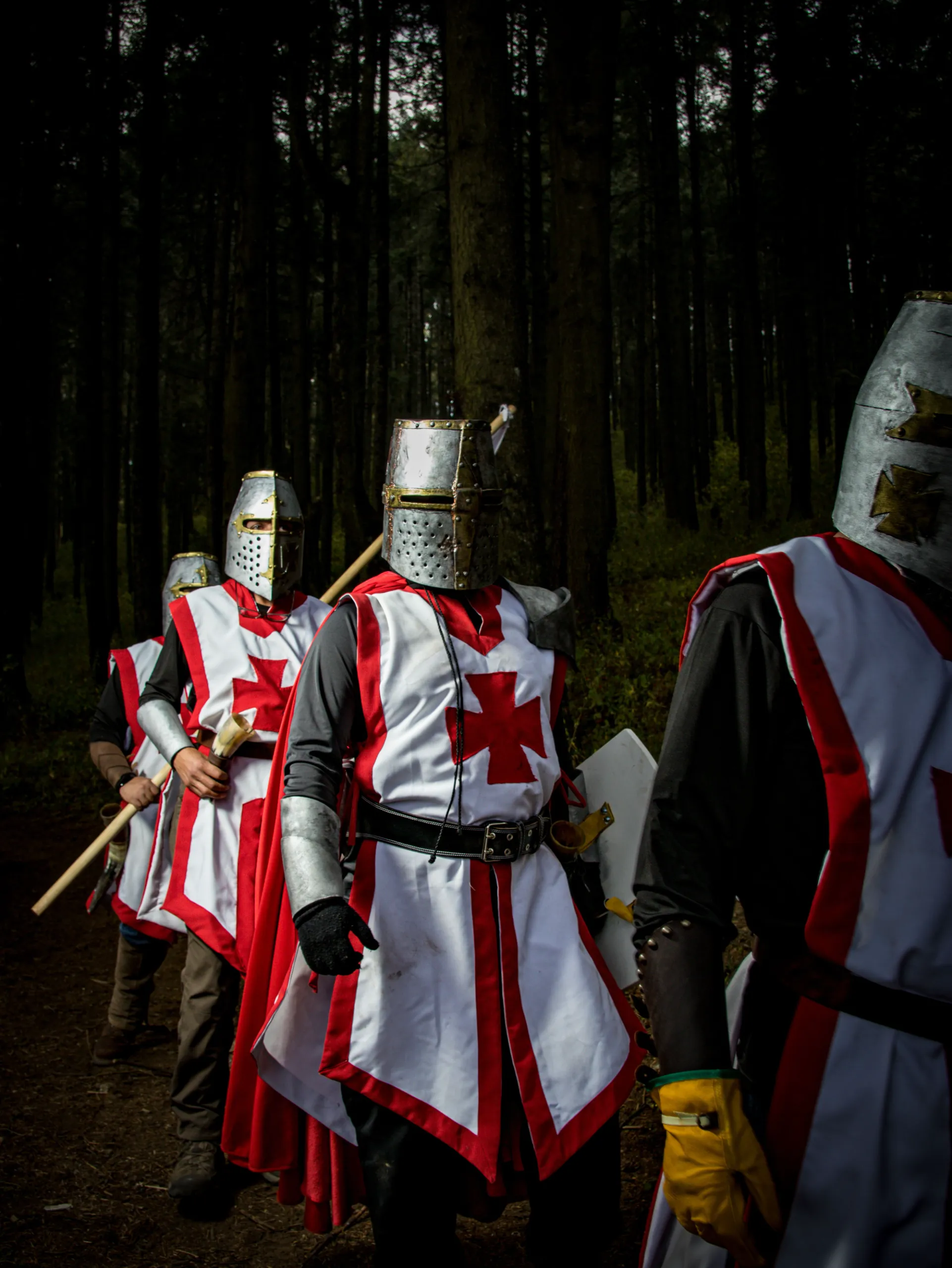
Most people know the Knights Templar from legend: secret treasures, hidden societies, a medieval order shrouded in mystery. What surprises many visitors is that Galicia has a real, documented Templar history, not just folklore. Stone churches, fortified crossings, and even a village still called O Temple stand as physical evidence that the Order was once a genuine power in this corner of Spain.
In this article we separate the documented history from the legends, and point you toward the places where you can still see the Templar footprint today.
A note on sources: the history below is drawn from historical research and regional archives, not firsthand family history. We’ve noted where the record is solid and where it shifts into legend.
Who Were the Knights Templar, Briefly
The Order of the Temple was founded in the early twelfth century to protect Christian pilgrims traveling to Jerusalem. Within a few decades it had grown into one of the wealthiest and most influential military orders in Christendom, with holdings stretching across Europe, including the Iberian Peninsula.
The Templars’ Arrival in Galicia
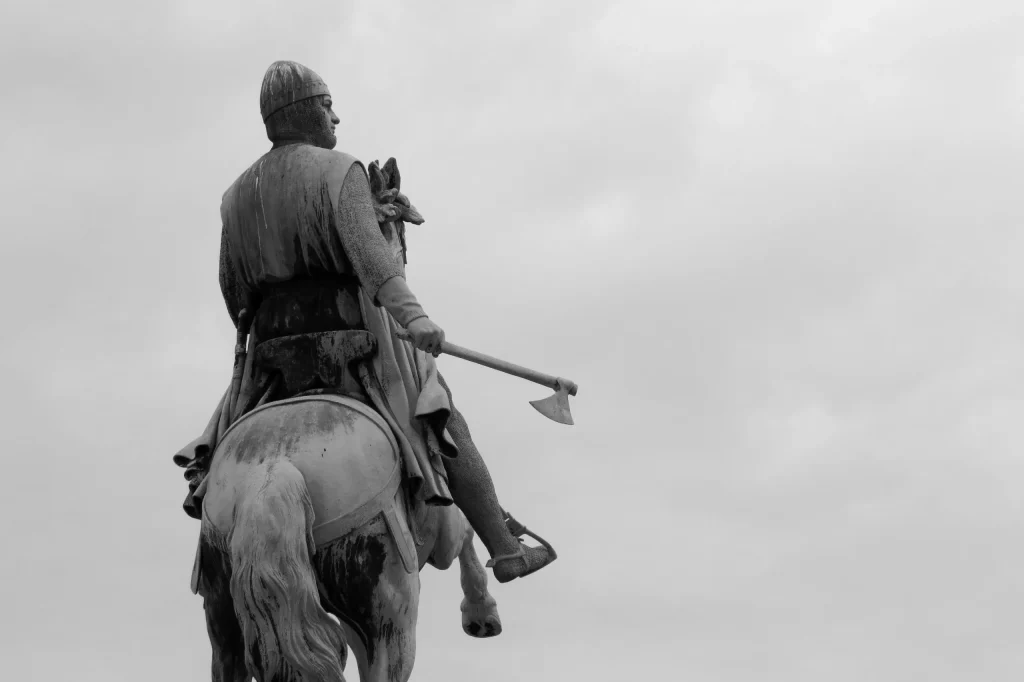
The Order’s presence in Galicia goes back to the middle of the twelfth century, with the earliest traces appearing around Celanova. From there, the Templars expanded their reach across the kingdom, establishing a network of encomiendas, self-sufficient estates that financed and supported the Order’s activities.
Historical records name seven Templar encomiendas in Galicia: Faro near A Coruña, Amoeiro in Ourense province, Coia near Vigo, and Canabal, San Fiz do Ermo, and Neira in Lugo province, along with a seventh in Betanzos that no longer survives.
Cambre and O Temple: The Order’s Galician Stronghold
The clearest and best-documented chapter of this story unfolds near A Coruña. In 1161, King Fernando II of León handed control of a strategically vital river crossing to the Templars, who built a fortified church there strong enough to control the movement of people and goods along the estuary for more than a century.
The village that grew up around it is still called O Temple today, a place name that comes directly from the Order. A few kilometers away in Cambre, the church of Santa María do Temple still stands, one of the most tangible Templar remains anywhere in Galicia.
Where You Can Still See the Templar Trail
- Santa María do Temple, Cambre (A Coruña province). The most direct physical link to the Order’s presence in Galicia, and the natural starting point for anyone tracing this history.
- San Pedro Fiz, O Incio (Lugo province, Ribeira Sacra area). A romantic-era church notable for being built largely in marble, a rarity in Spain, that once formed part of a walled complex with a hospital function for travelers.
- Ermita de San Miguel de Breamo, Pontedeume (A Coruña province). A hilltop chapel with the look and feel of a small fortress, associated with Templar legend.
- Augas Santas, Allariz (Ourense province). A sanctuary tied to the Order’s presence in the south of Galicia.
Legend Versus History
Galicia’s relationship with the Templars comes with its share of legend: hidden treasure, secret brotherhoods, and mysterious symbols carved into stone. These stories are part of the region’s folklore tradition, in the same spirit as the meigas and other figures of Galician mythology, but they shouldn’t be mistaken for documented history. Where the record is solid, as with Cambre and the network of encomiendas, we’ve said so. Where it drifts into legend, we’ve flagged that too.
What Happened to the Templars in Galicia
Like everywhere else in Europe, the Order’s story in Galicia ended abruptly in the early fourteenth century when the Templars were suppressed. Their Galician holdings passed first to the crown and were eventually redistributed, largely to the Order of the Hospital, though the transfer was contested for years between the monarchy and the Hospitallers.
FAQ
Were the Knights Templar really in Galicia? Yes. Historical records document seven Templar encomiendas across the region, along with physical remains like the church of Santa María do Temple in Cambre.
Can you visit Templar ruins in Galicia? Yes. Sites such as Santa María do Temple in Cambre, San Pedro Fiz in O Incio, and the Ermita de San Miguel de Breamo near Pontedeume are all open to visitors today.
Why is there a village called O Temple in Galicia? The name comes directly from the Knights Templar, who controlled a fortified crossing there starting in 1161 under a grant from King Fernando II of León.
Is the Templar treasure legend in Galicia based on fact? No, the treasure and secret-society stories are folklore. The documented history is about land holdings, fortifications, and strategic river crossings, not hidden riches.