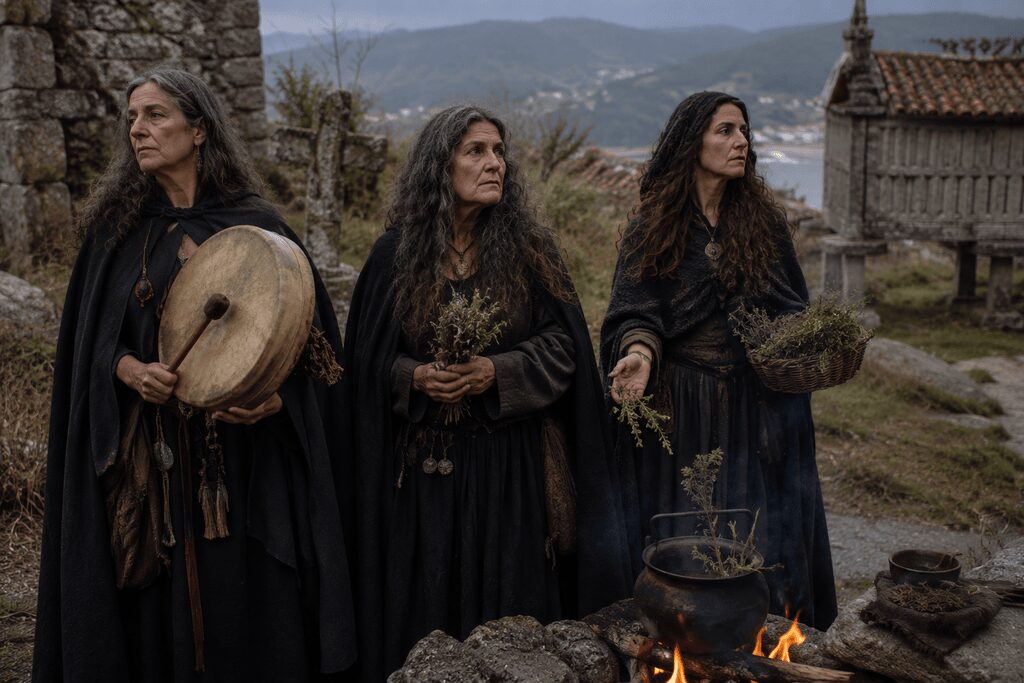
Ask anyone in Galicia whether they believe in meigas, the region’s witches, and you will almost certainly get the same answer: “Eu non creo nas meigas, pero haberlas, hainas.” I don’t believe in witches, but they exist. It is one of those sayings that tells you more about a place than any history book could. The meiga is not simply a figure from old stories here. She is a fixture of daily conversation, half joke and half genuine caution, and after living in Ribeira Sacra for a while we have come to understand why the line between the two is never fully drawn.
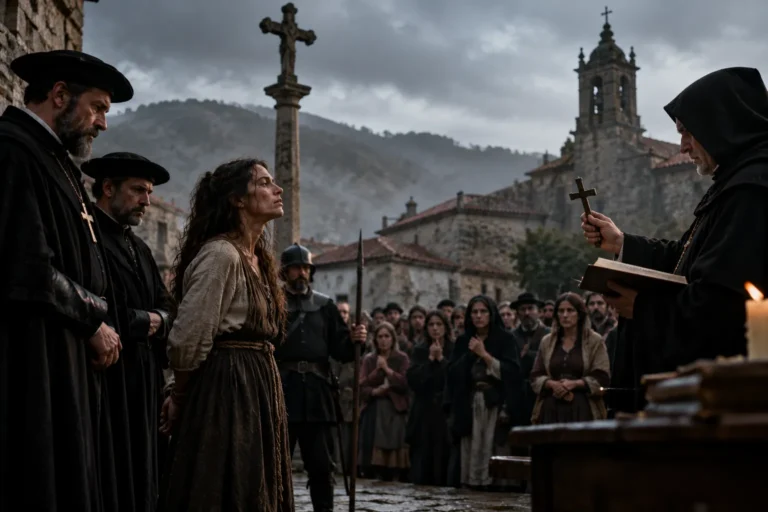
Unlike the witches of most European folklore, meigas were never purely evil. They could be healers, herbalists, and seers as easily as they could be sources of curses and bad luck. A meiga might be the woman in the next village who knew which plants cured a fever, or she might be blamed the moment someone’s cows stopped giving milk. This dual nature seems to be the whole point. Galicians did not divide the world into good and bad magic so much as into magic that had, for the moment, chosen a side.
The clearest surviving expression of this belief is the queimada, the flaming drink made from orujo, sugar, coffee beans, and citrus peel, set alight in a clay pot while someone recites the conxuro da queimada. The words of the spell read like an inventory of everything the old Galician imagination found unsettling: owls, toads, evil spirits, the wailing of dogs, the fog over the meadows, the meigas themselves. The fire and the recitation are meant to purify the drink and, by extension, everyone standing around it, driving off whatever ill will might be lingering nearby. We have seen it performed at village festivals more than once, always with a certain theatrical seriousness that suggests nobody present entirely wants to test whether the ritual is necessary.
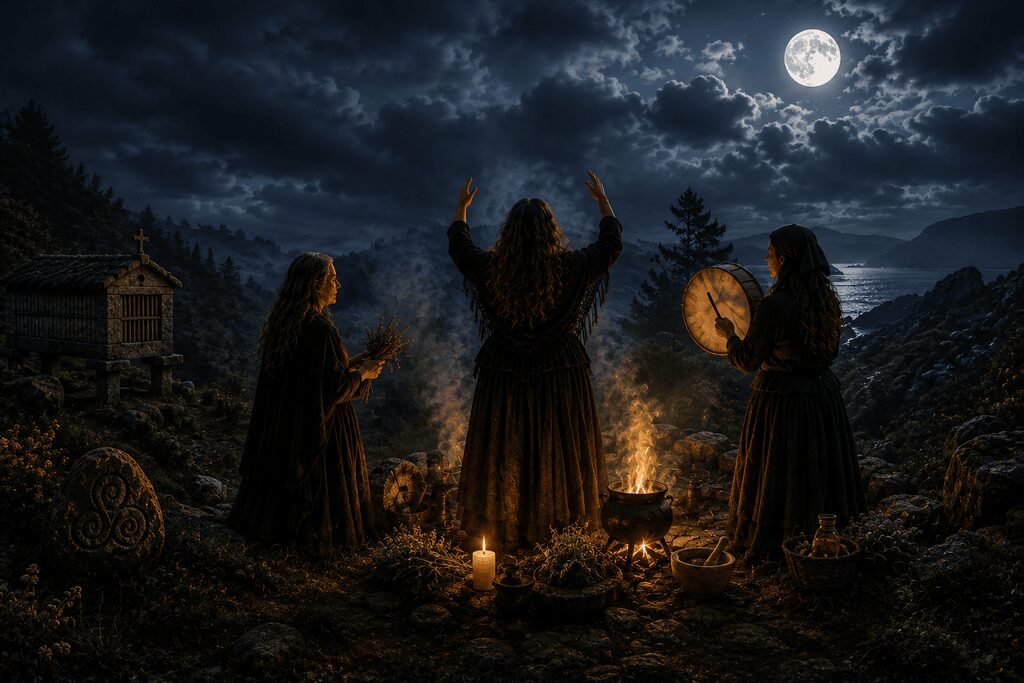
The persistence of the meiga in everyday Galician language is, in some ways, more telling than the queimada ceremony itself. People still talk about a meigallo, a hex or curse, without irony. Herbs gathered on the night of San Juan are still credited with protective power against exactly this kind of ill will. None of this requires anyone to state a belief out loud. It survives instead as a kind of background caution, a set of habits people keep up because their grandparents did and because, as the saying goes, it costs nothing to be careful.
What stands out to us, coming from a country with a very different relationship to its own folklore, is how unbothered Galicia is by the contradiction. The meiga is taken seriously enough to shape language, ritual, and a fair amount of tourism, and taken lightly enough that nobody loses sleep over it. That balance, rather than the witches themselves, might be the more interesting piece of Galician culture to understand.