Every year hundreds of thousands of people walk into Santiago de Compostela with blistered feet and a sense that they have arrived somewhere important. Few of them stop to ask why this particular city, tucked into the green hills of Galicia, became the destination of one of the largest pilgrimage networks in human history. The answer starts not with a well-organised plan but with a hermit, a field of stars, and a bishop who was willing to bet the future of his diocese on a discovery he could not fully prove.
A Hermit, a Bishop, and a King
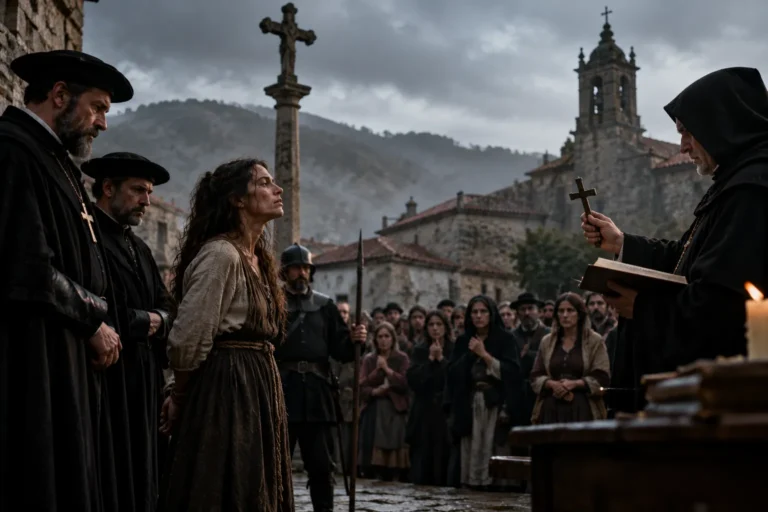
The story is usually placed in the early ninth century, somewhere around the year 813 or 814, during the reign of King Alfonso II of Asturias. A hermit named Pelayo, living in the remote countryside west of what is now Santiago, reported seeing strange lights in the sky above an abandoned Roman burial ground. Word reached the local bishop, Theodemar of Iria Flavia, who investigated the site and declared that the remains found there belonged to the apostle James the Greater, one of the twelve apostles of Jesus and, according to tradition, the first evangelist to bring Christianity to the Iberian Peninsula. The Latin name for the location, Campus Stellae, or field of the star, is generally accepted as the origin of the name Compostela, though some historians argue instead for a derivation from the Latin word for burial ground, componere. Either way, a shrine was built, and the discovery was quickly reported to the king.
Alfonso II did not treat this as a minor local matter. He travelled from Oviedo to the site himself, becoming, according to tradition, the first pilgrim to Santiago, and ordered the construction of a modest church over the tomb. This royal endorsement mattered enormously. In the early ninth century, the Christian kingdoms of the north of Spain were small, fragmented, and under constant pressure from the Muslim emirate that controlled most of the peninsula further south. A confirmed apostolic tomb on Christian soil was not simply a religious discovery. It was a political and ideological asset of the first order, and Asturian and later Galician rulers understood its value immediately.
The Making of a Legend
The theological justification for James’s presence in Galicia rested on two separate traditions that were gradually merged into one continuous narrative. The first held that James had preached in Hispania during his lifetime, a claim with thin historical evidence but long-standing currency in early Christian writing. The second held that after his martyrdom in Jerusalem around the year 44, described briefly in the Acts of the Apostles, his disciples carried his body by boat to the Galician coast for burial, guided by a series of miracles. Neither tradition can be verified by modern historical method, and serious scholars have long noted that the tomb identified by Theodemar may in fact have belonged to a different, unrelated burial, possibly even that of Priscillian, a fourth-century bishop executed for heresy whose cult had once been popular in the region. What matters for the history of the route, though, is not whether the identification was accurate, but that it was believed, and believed quickly, by people with the power to act on it.
Growth, Raids, and Recovery
Throughout the ninth and tenth centuries, the shrine grew in stages rather than through any single dramatic event. Successive kings of Asturias and León funded a series of increasingly ambitious churches on the site, each replacing a structure damaged by fire, by Norman raids along the coast, or simply by the passage of time. The most serious setback came in 997, when the Muslim military leader Almanzor led a raid deep into Galician territory and destroyed much of the town, though tradition holds that he spared the tomb itself out of respect. The bells of the church were famously carried off to Córdoba, where they remained until they were returned two and a half centuries later after the city fell to Christian forces, a detail that captures how tightly the shrine’s fortunes were bound up with the broader struggle between Christian and Muslim Iberia.
Gelmírez and the Rise of an Archbishopric
The real transformation from local shrine to international pilgrimage destination took place in the eleventh and twelfth centuries, and one figure in particular deserves credit for it: Diego Gelmírez, who became bishop and later the first archbishop of Compostela. Gelmírez was an unusually capable administrator and promoter, and under his leadership the modest church was replaced by the large Romanesque cathedral that still stands today, construction of which began in 1075 under his predecessors and continued through his long tenure. He lobbied Rome successfully to raise Compostela to an archbishopric, negotiated favourable relationships with the papacy and with foreign rulers, and actively encouraged the production of promotional material for the pilgrimage, most famously the Codex Calixtinus, compiled around 1140. This remarkable manuscript, traditionally attributed to Pope Callixtus II though almost certainly the work of several authors working under Gelmírez’s influence, included sermons, accounts of miracles attributed to the saint, and, most usefully for historians, a detailed guide for pilgrims describing the routes, the towns along the way, the quality of the water, and even which local populations to be wary of. It is, in effect, the first pilgrim guidebook to the Camino, and it gives us a clear picture of how organised the route already was by the mid-twelfth century.
A Network of Routes, Not One Road
By this point the Camino was not a single path but a network converging on Santiago from across Western Europe. The route that receives the most attention today, the Camino Francés, crossed the Pyrenees from France and ran west across northern Spain through Burgos and León before entering Galicia. It became the dominant route largely because of the influence of Cluniac monasteries in France, which actively promoted the pilgrimage, established hospices along the way, and encouraged the construction of bridges and roads to support the growing traffic. But other routes mattered just as much regionally. The Camino Primitivo, running from Oviedo, is considered the oldest of all, following the same path that Alfonso II supposedly took as the first pilgrim. The Camino Portugués came up from the south, the Camino del Norte hugged the Cantabrian coast, and the Camino Inglés brought pilgrims who arrived by ship from England and northern Europe and disembarked at the Galician ports of A Coruña or Ferrol. Here in the Ribeira Sacra area, older paths connecting monastic communities along the Sil and Miño rivers also fed into this wider web, a reminder that the Camino was never one road but a living system that adapted to whatever terrain and population it needed to serve.
The Scale of Medieval Pilgrimage
The scale of medieval pilgrimage to Santiago is genuinely difficult to overstate. Alongside Jerusalem and Rome, it formed one of the three great pilgrimage destinations of Latin Christendom, and for pilgrims from northern Europe it was considerably more accessible than either of the other two, which typically required a sea voyage through hostile or contested waters. Papal decrees granting plenary indulgence to pilgrims who completed the journey during designated Holy Years added further incentive, and a substantial support infrastructure grew up around the route: hospices run by religious orders, bridges built specifically to ease the crossing of rivers, and the scallop shell that pilgrims wore as proof of completion, a symbol whose origin is tied to the abundance of shells on the Galician coast near where James’s body was said to have arrived.
Decline and Modern Revival
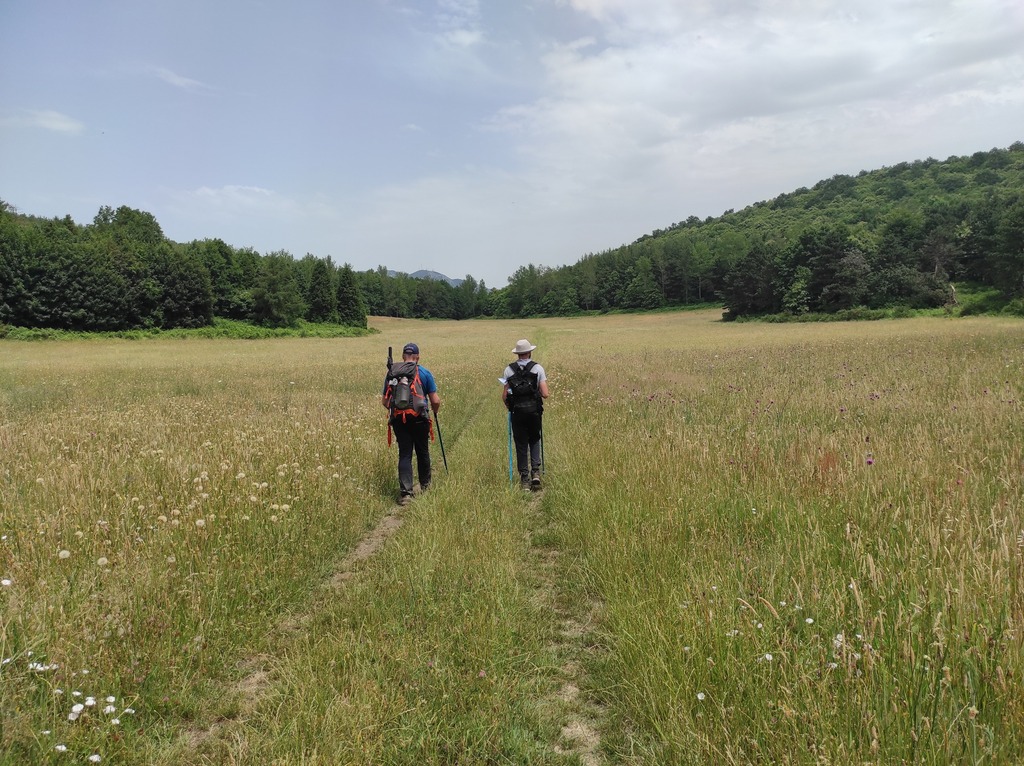
Interest in the Camino declined sharply from the sixteenth century onward, a fall driven by the Protestant Reformation’s rejection of relic veneration, by plague and political instability across Europe, and later by the general secularising currents of the Enlightenment. For several centuries the route survived mainly as a matter of local devotion rather than international travel. Its revival in the twentieth century owed a great deal to the efforts of a small number of dedicated researchers and clergy, most notably Elías Valiña Sampedro, a parish priest in the village of O Cebreiro who is widely credited with physically marking the modern route with the now-famous yellow arrows during the 1980s. UNESCO’s recognition of the Camino Francés as a World Heritage Site in 1993, combined with a steadily growing interest in slow travel and long-distance walking, brought the numbers back up from a few hundred pilgrims a year in the mid-twentieth century to several hundred thousand today.
A Contingent Origin
What is easy to lose in the modern experience of the Camino, surrounded as it now is by guidebooks, apps, and a well-developed hospitality industry, is how contingent its origin actually was. A hermit’s report of unusual lights, a bishop willing to make a bold claim, and a king prepared to stake his authority on that claim combined to produce something that outlasted the kingdom of Asturias, outlasted the medieval church’s political dominance, and continues to draw people on foot across an entire continent more than twelve centuries later. Whatever one makes of the underlying claims about the apostle’s tomb, the route itself stands as one of the more remarkable examples of how a local, contested, and probably unverifiable discovery became one of the defining shared journeys of European culture.