Long before cruceiros marked the crossroads and stories of the Santa Compaña kept people indoors after dark, the people who lived in this corner of the Iberian Peninsula had their own gods. We know them today mostly through stone: votive altars, inscriptions, and the castros they left scattered across the hills of Galicia.
Who Were the Gallaeci?
The Gallaeci were the pre-Roman inhabitants of what is now Galicia and northern Portugal. They’re often called “Celtic,” and the region‘s Celtic identity is still part of how Galicia presents itself today, but the picture is more complicated than that label suggests. Archaeologists now see the Gallaeci as a blend of indigenous Iberian traditions and Celtic influences arriving from central Europe, rather than a straightforward transplant of Celtic culture. The truth is we don’t have a single “Galician mythology” from this period so much as a patchwork of local cults, each tied to a specific place and a specific community.
A Landscape Full of Gods
There was no single pantheon shared across the region, no galician equivalent of Zeus or Jupiter presiding over a fixed hierarchy. Instead, worship was intensely local. A god named on a votive stone near one river might be unknown a valley away, worshipped instead under a different name entirely.
A few names recur often enough in the archaeological record to stand out:
Bandua appears more than almost any other deity in Gallaecia, though always with local epithets attached, essentially “Bandua of this tribe” or “Bandua of that place.” The consistent thread is a connection to protection and war.
Cossus shows up alongside Bandua in a number of inscriptions, also carrying military and protective associations.
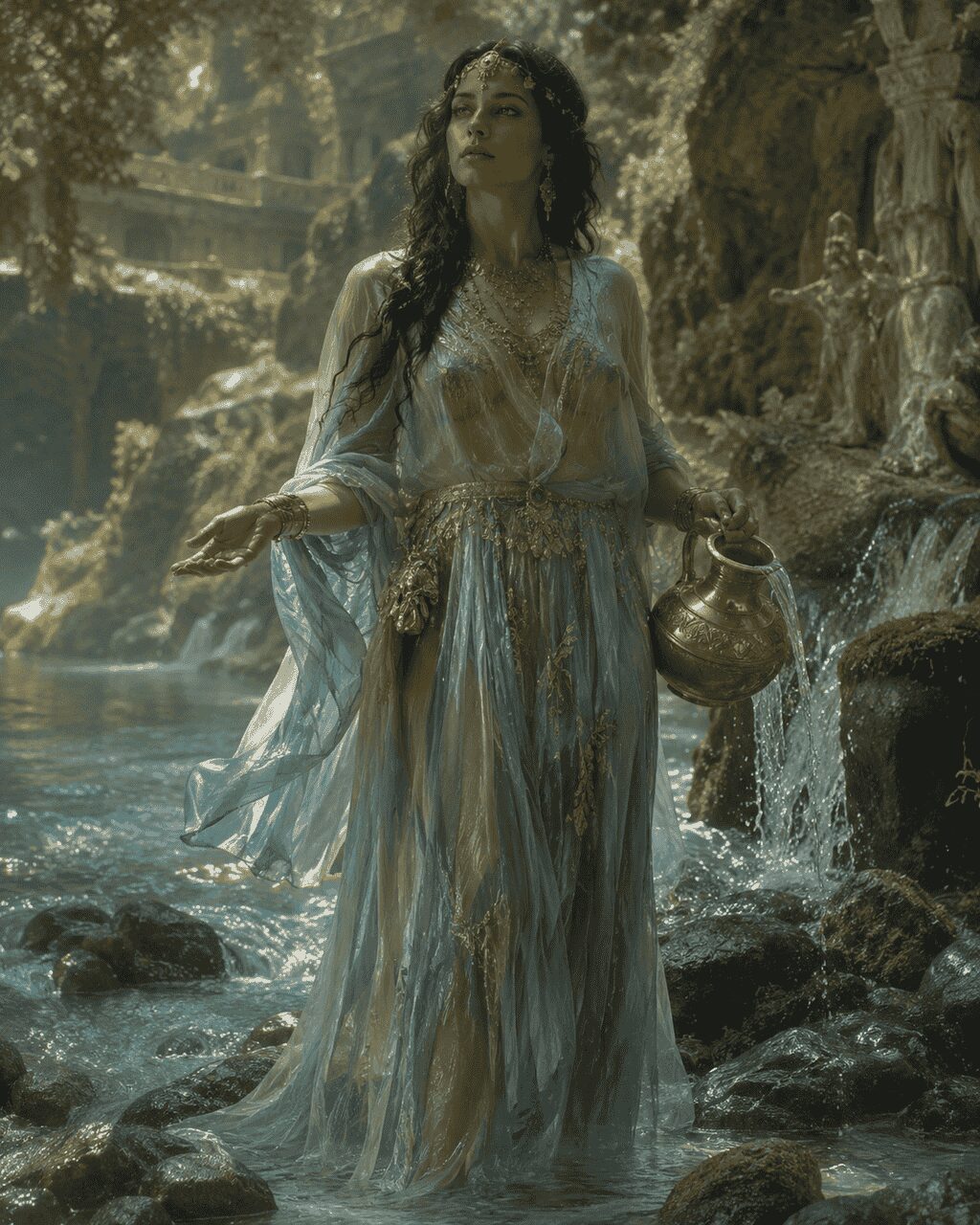
Nabia was a water goddess, linked to rivers and springs. Her name is thought to survive in place names across the region today.
Reue was associated with mountains, fitting for a landscape defined by its peaks and valleys.
None of these were figures with elaborate myths attached, at least not that survived. What we have are names carved by people asking for protection, giving thanks, or marking a sacred spot. That’s a very different kind of religious record than a written mythology, and it means a lot of what these gods actually meant to their worshippers is lost to us.
Sacred Water, Sacred Stone
If there’s a thread connecting this pre-Roman religion to the Galicia we write about today, it’s water. Springs, rivers, and river confluences were treated as sacred, places where the divine touched the everyday. That reverence for water never really disappeared. It resurfaced later in Christianized form, in holy wells and pilgrimage traditions, and in folk belief, in the water spirits and omens that populate Galician water mythology even now. When we wrote about the Santa Compaña and the meigas, we were describing the descendants, however distant, of this older instinct to see rivers and springs as thresholds to something else.
The castros, the hillfort settlements that still dot the Galician landscape, weren’t purely defensive or domestic. Excavations have turned up altars and votive offerings within them, suggesting these fortified villages doubled as centers of worship, not just shelter.
What About Druids?
It’s tempting to import the druids of Gaul and Ireland into the Galician story, but the evidence doesn’t really support it. There’s little sign of an organized priestly class here comparable to what Julius Caesar described among the Gauls. Whatever religious authority existed among the Gallaeci was probably more local and informal, tied to individual communities rather than a region-wide institution.
When Rome Arrived
Roman conquest of the region, completed by the late 1st century BC, didn’t erase local religion so much as translate it. Through a process historians call interpretatio romana, local gods were paired with Roman equivalents that seemed to share their character. Bandua, given his protective and martial associations, was sometimes equated with Mars. The old names didn’t disappear immediately: inscriptions continued invoking Bandua and Nabia well into the Roman period, often right alongside distinctly Roman gods, a sign of two religious worlds overlapping rather than one simply replacing the other.
From Gods to Ghosts
What’s striking, looking at this from a few thousand years later, is how much of the underlying instinct survived even as the names and forms changed completely. The specific gods faded. The sense that certain rivers, springs, and hills carry something beyond the physical did not. It’s a thread running from the Gallaeci’s votive stones through centuries of Christianization to the meigas and water spirits still spoken of in Galicia today, not as continuous belief, exactly, but as a landscape that has never quite stopped being treated as sacred.