
Are Wild Boars Common in Galicia?
If you’re planning a holiday in Galicia or preparing to walk the Camino de Santiago, you may have heard stories about wild boars roaming the countryside. News reports often mention boars damaging farmland, crossing roads, or even wandering into villages. But how common are wild boars in Galicia, and should visitors be worried?
The good news is that while Galicia has one of the largest wild boar populations in Spain, encounters with people are relatively rare. By understanding their behavior and taking a few simple precautions, you can safely enjoy one of Spain’s most beautiful regions.
Are There Many Wild Boars in Galicia?
Yes. Galicia is home to a thriving population of wild boars. The region‘s lush forests, mild climate, and abundant food sources create the perfect habitat for these adaptable animals.
Wild boars can be found throughout Galicia, from dense woodlands and mountain ranges to farmland and even areas close to towns. Over the past few decades, their numbers have increased significantly due to several factors, including milder winters, fewer natural predators, and plentiful food.
As a result, sightings have become more common, especially in rural areas.
Why Are Wild Boars a Problem in Galicia?
Although wild boars are an important part of Galicia’s ecosystem, they also create challenges for local communities.
One of the biggest issues is agricultural damage. Wild boars dig through fields searching for roots, insects, and crops. Cornfields, potato farms, vineyards, and vegetable gardens are particularly vulnerable, and farmers often experience significant losses.
Another major concern is road safety. Wild boars are most active during dusk, nighttime, and early morning. They frequently cross rural roads, leading to thousands of vehicle collisions across northern Spain every year. Drivers are advised to remain alert, especially when traveling through forested areas after dark.
In some towns, wild boars have become accustomed to searching for food in garbage bins and compost piles. This has led to more sightings near residential neighborhoods, although they generally avoid direct contact with people.
Are Wild Boars Dangerous to Tourists?
For most visitors, the answer is no.
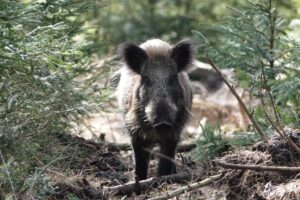
Wild boars are naturally shy animals and usually flee as soon as they detect human presence. Most hikers, pilgrims, and nature lovers will never see one during their trip.
However, wild boars are powerful wild animals and should always be treated with respect. Adult males can be surprisingly large, while females with piglets are especially protective of their young.
Most incidents involving people occur when someone accidentally surprises a wild boar at close range or allows a dog to chase one. Giving the animals plenty of space greatly reduces any risk.
What Should You Do If You See a Wild Boar?
If you encounter a wild boar while hiking in Galicia, there’s no need to panic.
Follow these simple safety tips:
- Stay calm and keep your distance.
- Never approach or attempt to feed the animal.
- Avoid sudden movements or loud noises.
- Give the boar a clear escape route.
- Keep dogs on a leash in forested areas.
- If you see piglets, assume the mother is nearby and slowly back away.
In almost every case, the wild boar will move away long before you get close.
Is It Safe to Walk the Camino de Santiago?
Absolutely.
Thousands of pilgrims complete the Camino de Santiago through Galicia every year without encountering any problems with wild boars. The famous pilgrimage routes pass through forests, farmland, villages, and open countryside where wildlife naturally lives.
Because wild boars are primarily nocturnal, they are far less active during the daytime when most pilgrims are walking. Even if wild boars are present in the area, they generally remain hidden in dense vegetation.
For hikers, the greatest wildlife hazards are often ticks, uneven terrain, or changing weather conditions rather than wild boars.
Why Is the Wild Boar Population Growing?
Wildlife experts point to several reasons why wild boar numbers continue to increase across Galicia.
Key factors include:
- Mild winters that improve piglet survival.
- Large forests providing excellent shelter.
- Abundant food from both natural habitats and farmland.
- A decline in natural predators.
- Exceptional adaptability to human environments.
Regional authorities use regulated hunting and wildlife management programs to help control the population. However, because wild boars reproduce quickly, managing their numbers remains an ongoing challenge.
Can You Photograph Wild Boars?
For wildlife photographers, spotting a wild boar can be a memorable experience.
If you’re lucky enough to see one, always observe from a safe distance. Use a telephoto lens rather than trying to get closer. Never block the animal’s path or attempt to take selfies with wildlife.
Respecting wild animals not only keeps you safe but also helps preserve their natural behavior.
Final Thoughts
Wild boars are a fascinating part of Galicia’s rich wildlife. While they do cause problems for farmers and occasionally create traffic hazards, they are rarely a danger to tourists.
Whether you’re hiking the Camino de Santiago, exploring Galicia’s forests, or enjoying its peaceful countryside, there’s little reason to be concerned. Staying aware of your surroundings, respecting wildlife, and following basic safety advice will allow you to enjoy your visit with confidence.
If you happen to spot a wild boar during your travels, consider it a special glimpse into Galicia’s diverse natural environment—one of the many reasons this green corner of Spain is such a rewarding destination for outdoor enthusiasts.