When people hear that Galicia has an Atlantic climate, they usually imagine one thing: rain. And yes, Galicia gets plenty of it. But that description misses something important.
Galicia is not climatically uniform. The Atlantic Ocean, mountains, valleys, altitude and exposure to prevailing winds create a remarkable number of local climate differences. You can leave a wet coastal town, drive inland for an hour or two and find yourself somewhere that feels noticeably warmer and drier. In parts of inland Galicia, summer temperatures can be far higher than the region’s cool Atlantic reputation suggests. On exposed western slopes, rainfall can be dramatically higher.
That is why “What is the climate like in Galicia?” doesn’t have one answer. A better question is: where in Galicia?
A note on sources: the general climate information in this article is based on research, including AEMET (the Spanish state meteorological agency). The section “From Our Experience” is based on our own life in the Ribeira Sacra.
Why Galicia Has So Many Microclimates
Three things explain much of the variation: the Atlantic Ocean, the mountains and the valleys.
The Atlantic has a strong moderating effect on temperatures, particularly along the coast, but that influence weakens as you move inland. At the same time, Galicia’s mountainous terrain forces moist Atlantic air upwards. As the air rises it cools and releases rain. This is why some western and southwestern parts of Galicia receive enormous amounts of rainfall, while areas further inland can be considerably drier.
AEMET describes this effect clearly. Southwest-facing Atlantic winds meet the coastal mountain ranges around the Rías Baixas, producing some of the wettest areas in Galicia. Further east, beyond the central mountain divide, rainfall drops substantially because of the rain-shadow effect.
And then there are the valleys. A valley can have a noticeably different climate from hills only a few kilometres away.
The Rías Baixas: Mild, Green and Often Wet
The Rías Baixas in southwestern Galicia are among the areas most strongly influenced by the Atlantic. Around the Ría de Vigo, Pontevedra, Arousa and Muros e Noia, the sea keeps winters mild compared with inland areas, and summers are warm without feeling as continental as they do further inland.
But this is also one of Galicia’s wetter regions. According to AEMET, parts of the zone stretching from Fisterra towards Vigo and inland towards Santiago exceed 1,750 mm of annual precipitation, with some locations passing 2,500 mm.
The Rías Baixas can be attractive if you want:
- mild winters
- proximity to the sea
- green landscapes
- relatively warm summers
- coastal living
If your priority is less rain, though, you need to look more carefully at the map.
The Atlantic Coast: Not All Coastal Galicia Is the Same
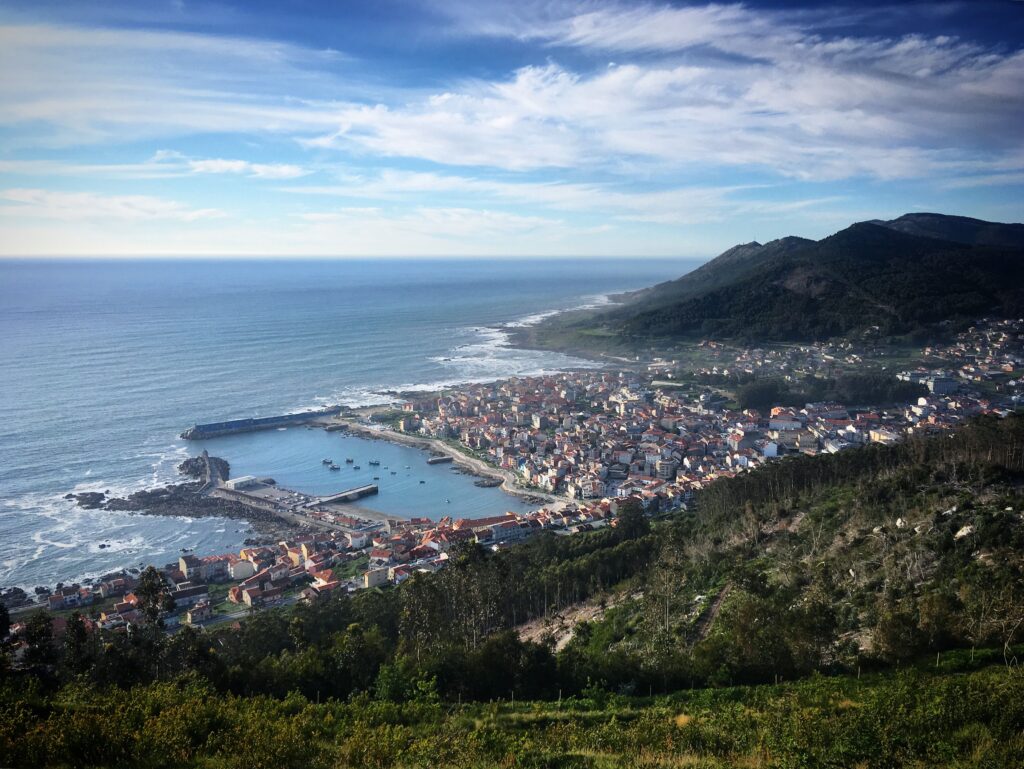
It is tempting to assume that being beside the sea means the same climate everywhere. It doesn’t. The northern coast around A Coruña and Lugo has its own character, shaped by exposure to the Atlantic, prevailing winds and local topography. It can be windy and humid, with temperatures moderated by the ocean.
Move a short distance inland and the effect of the sea begins to weaken. This is one reason why a coastal town’s weather averages can be misleading if you are actually considering a house 15 or 20 kilometres inland. The exact location matters.
Inland Galicia: Warmer Summers and Bigger Temperature Differences
This is where Galicia often surprises people. Inland, you lose some of the ocean’s moderating influence. Summers can become significantly hotter, winters can feel colder, and the difference between daytime and nighttime temperatures is much greater than on the coast.
You might spend a cool morning on the coast and end the day somewhere inland where temperatures are far higher. This is particularly true in parts of Ourense province, where lower elevations, deep valleys and distance from the Atlantic produce a much warmer summer climate.
It is one of the reasons Galicia shouldn’t simply be described as “cool and rainy.” It can be. But it can also be surprisingly hot.
The Ribeira Sacra: A Climate of Its Own
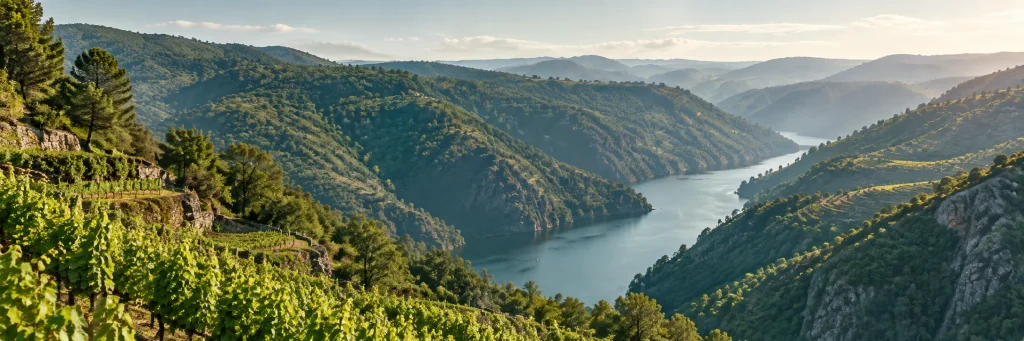
The Ribeira Sacra is a good example of how geography creates local climate differences. The region is defined by deep river valleys, steep slopes and vineyards planted on terraces. The Miño and Sil valleys create sheltered environments that can feel very different from the higher ground around them.
Altitude, orientation and exposure all make a real difference here. A south-facing slope can receive considerably more sunshine than a neighbouring north-facing one. A house high on a hill can experience different wind and temperature conditions from one down in a sheltered valley. Two properties that look close together on a map can feel very different in everyday life.
From Our Experience
We noticed this ourselves after moving to the Ribeira Sacra. We chose the area partly because of the house prices and the climate, but the reality is more nuanced than “inland Galicia is warmer.”
Our summers can be surprisingly hot, while winter brings plenty of rain. That combination is part of what makes the area so green and productive. It also means you need to understand the microclimate of the exact place you are considering, rather than relying on a general description of Galicia.
Valleys Can Be Warmer Than You Expect
Cold air behaves differently in valleys than on exposed slopes, and sunshine exposure can vary dramatically with orientation. Two homes at a similar altitude can experience different conditions. A south-facing house with good sun may feel completely different from one in a shaded valley location.
So look at more than the postcode. Pay attention to:
- the orientation of the house
- the slope
- surrounding hills
- tree cover
- exposure to prevailing winds
- elevation
- proximity to a river or valley
- how much direct sunlight the property gets in winter
These things can make a surprisingly large difference to how comfortable a house feels.
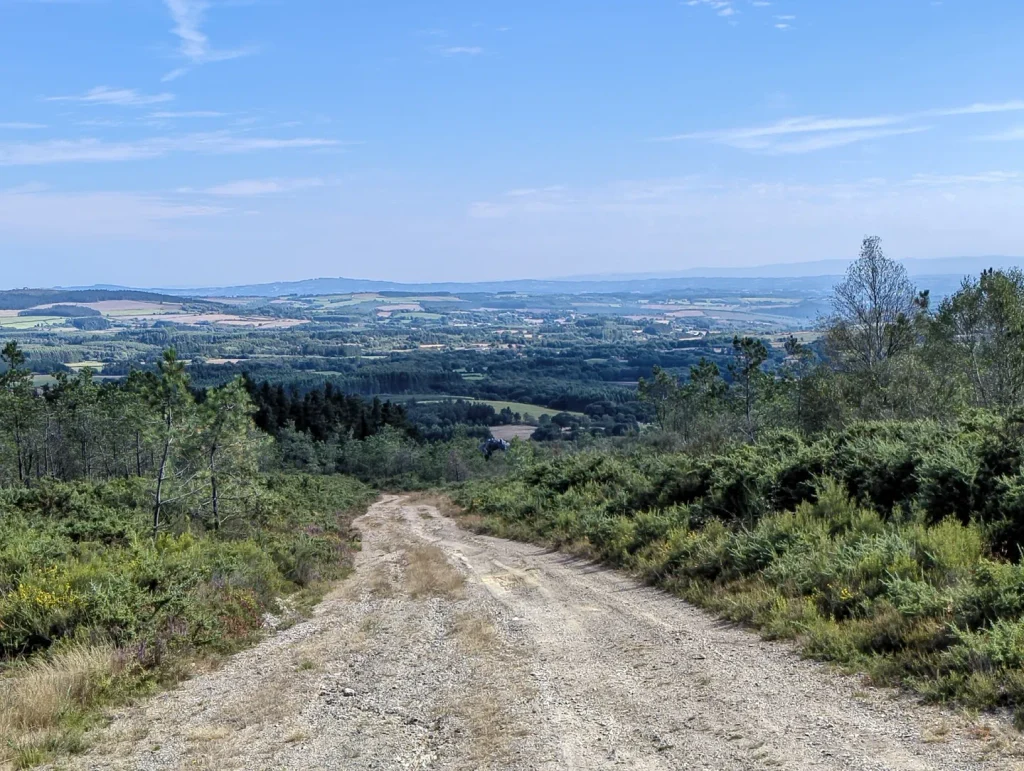
The Mountains: Cooler, Wetter and More Extreme
As elevation increases, temperatures fall. The mountains of eastern and southeastern Galicia have a different climate from the lower valleys and the coast, and snow is much more likely in winter. You can sometimes drive from a mild valley into mountain country and meet completely different conditions within a short distance.
For hikers and nature lovers, this is part of Galicia’s appeal. For someone buying a rural property, it deserves careful investigation. A beautiful mountain location can also mean:
- colder winters
- more frost
- more difficult access in bad weather
- greater exposure to wind
- less winter sunshine, depending on orientation
Beautiful isn’t always the same as practical.
Why the Weather Forecast Isn’t Always Enough
Regional forecasts can hide enormous local differences. A forecast for “Ourense” doesn’t necessarily tell you what will happen in a particular valley. Rain can fall heavily on one side of a mountain while an area nearby stays relatively dry.
That is why local weather stations are so useful when you are researching somewhere you might actually live. MeteoGalicia publishes climate information and projections for the region, and AEMET maintains detailed climatological summaries. If you are seriously considering a location, don’t just check next week’s forecast. Look at long-term patterns.
What This Means If You Are Buying a House in Galicia
This is where microclimates stop being an interesting geographical detail and become a property-buying issue. Imagine two houses at roughly the same price. One sits on an exposed hill with little winter sun. The other is slightly lower, sheltered from the wind and facing south. On paper they look similar. In reality they could feel very different for nine months of the year.
If possible, visit a property at different times of the year, and ask yourself:
- Where does the sun go in winter?
- How exposed is the house to wind?
- Does the garden stay wet?
- How quickly does the ground dry after rain?
- Does the house receive direct sunlight?
- Are there signs of damp?
- How does the place feel on a cold, wet day rather than a sunny afternoon in August?
That last question matters most. Anyone can fall in love with Galicia on a beautiful summer day. You need to know whether you will still love the property in January.
Galicia’s Climate Is One of Its Greatest Advantages
The great thing about Galicia’s climate is that there isn’t just one version of it. You can choose the coast, the hills, a sheltered river valley, the warmer inland areas or the mountains. Each comes with trade-offs.
Someone who wants mild winters and easy access to the sea may be happiest on the coast. Someone who wants warmer summers and doesn’t mind colder winters may prefer inland Galicia. And for someone looking for peace, space, land and a rural lifestyle, the microclimate of an individual valley or hillside may matter more than the name of the comarca.
Don’t ask whether Galicia has good weather. Ask which Galician climate is right for you.
Final Thought
One of the biggest mistakes people make when researching Galicia is treating it as a single place. The geography is too varied for that. Galicia is a collection of small climates stitched together by mountains, valleys, rivers and the Atlantic Ocean.
If you are thinking about moving here, that is good news. It means you have more choice than you might realise. You just need to find the right part.