
How Much Spanish Do You Really Need to Move to Rural Galicia?
One of the questions we hear most often from people thinking about moving to Galicia is how much Spanish they really need.
It is a fair question. Moving to another country is already a big step, and having to learn a new language at the same time can make the whole thing feel even more complicated.
We wondered about it ourselves before we moved. We knew our Spanish would not be perfect. We also knew we were not heading for Madrid or Barcelona, where English often gets you through. We were moving to rural Galicia, where things are a little different.
Looking back, we probably worried about the language more than we needed to. But we also underestimated how important it would become.
Our answer is this: you do not need fluent Spanish to live in rural Galicia. But you do need to be willing to use the Spanish you have, keep learning, and make the effort to communicate even when you are not entirely sure what you are doing.
Learning Spanish Was Only Part of the Preparation
We spent a huge amount of time preparing for our move. We read almost everything we could find online about living in Galicia. We researched houses, property prices, regions, the climate and all the practical things we thought we would need to know.
But preparing on a computer screen is not the same as standing in front of someone who is speaking Spanish to you, when the conversation suddenly goes in a direction you did not expect.
Translation apps are incredibly useful, and we still use them to check a word or understand a letter. They give you a starting point when you do not know how to say something. But they do not replace actually communicating with people.
When you translate a document at home, everything is controlled. You can read the sentence, translate it, read it again and work out what it means. Standing at a counter is different. Someone asks a question you did not expect. You understand half of it. You try to answer. They explain something else, and you realise you misunderstood the first thing completely.
That is when even a little Spanish becomes very valuable.
You Do Not Have to Speak Perfect Spanish
One of the biggest mistakes you can make is thinking you must speak Spanish perfectly before you start using it. If you wait until your Spanish is perfect, you will probably wait forever.
We found that making an effort mattered far more than getting everything right. Say hello. Explain what you need. Ask someone to speak more slowly. Use the words you know, and use a translation app when you get stuck. Do not be embarrassed when you get something wrong. People can see that you are trying.
We also discovered that the best solution is often simply to go and ask. If we could not work out how something worked, it was usually easier to get in the car and visit the relevant place than to spend hours trying to solve it online.
That sounds obvious, but when you are new to a country and not yet confident in the language, taking that first step can be surprisingly hard. Once you are there, things usually become easier. Someone points you in the right direction. Someone else explains what you need to do. You understand a little more than you expected, and next time you know a little more still.
That is how your Spanish improves in real life.
Rural Galicia Makes the Difference
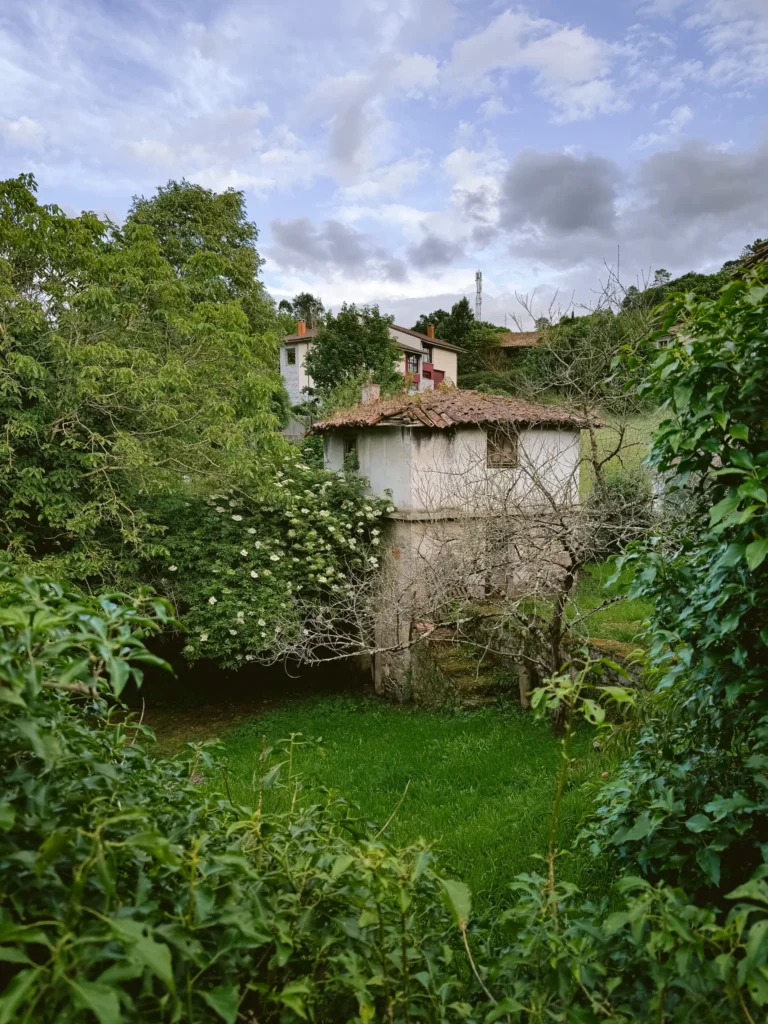
Where you live matters too. We live in the Ribeira Sacra, and rural Galicia is very different from a large Spanish city or an area with a big international population.
You should not assume that everyone will speak English. But that does not mean people will not help you. Quite the opposite. We have found that people are generally very willing to help once they see you are making an effort. You just cannot expect the whole conversation to happen in English.
That is actually one of the things we like about living here. You become part of everyday life instead of staying in a small bubble of people who speak your own language. It also forces you to learn. You start recognising the same words, you learn how people ask questions, and you begin to understand things that seemed completely incomprehensible when you arrived.
You do not notice the progress from one day to the next. Then one day you realise you have just had a whole conversation in Spanish without thinking about it. Those moments are worth a lot.
Some Situations Are More Difficult Than Others
There are situations where basic Spanish is not enough. Going to the supermarket is one thing. Sorting out something complicated with a bank is another.
For us, opening a bank account was the most difficult part of the bureaucracy. It was not impossible, but it was certainly not a situation where you can smile, point at your phone and hope Google Translate solves everything.
This taught us another important lesson: being able to communicate in Spanish does not mean you have to do everything yourself. If you are dealing with complicated legal matters, buying property or signing documents you do not fully understand, proper advice is far more sensible than relying on your own translation of a paragraph.
Language gives you independence. It does not make you a lawyer, a gestor or a property expert. Knowing the difference is important.
Buying a House Takes Things to Another Level
We noticed this most during our house search. We viewed roughly 35 properties before we found the house we eventually bought. That meant talking to agents, asking questions, walking through houses and trying to understand exactly what we were looking at.
Buying a house is not just about understanding whether someone says the kitchen is large or the views are good. You need to ask why something is being sold. You need to understand what is included. You need to ask about the property, the land and the surrounding area. And sometimes you need to recognise that the answer you just received does not quite answer the question you asked.
Our estate agent was excellent and spoke Dutch, which made some things easier for us. But language did not stop being relevant. The more Spanish you understand, the more independently you can judge what is happening around you.
That is probably the real benefit of learning the language before you move. It is not about becoming fluent to impress people. It is about becoming less dependent.
You Do Not Need to Know Everything Before You Arrive
If we could give our earlier selves one piece of advice, it would be not to worry so much about knowing everything before we arrived.
We prepared extensively, and that preparation helped enormously. But there was no way to know every word, every procedure or every situation we would run into. Some things you simply learn by doing them. That is true of moving house, dealing with bureaucracy, understanding how things work locally and learning the language.
You make a mistake. You ask someone. You learn the correct word. You remember it next time. Slowly, things that once seemed complicated become normal.
So How Much Spanish Do You Really Need?
If you are asking whether you need fluent Spanish before moving to rural Galicia, our answer is no. Do not let that stop you.
But if you are asking whether you should make an effort to learn Spanish before you arrive, our answer is absolutely. Learn enough to introduce yourself, ask questions, understand basic instructions and handle everyday situations. Then keep learning once you are here. Living in Galicia will probably teach you Spanish in ways a classroom never could.
And if you are moving to a rural area, we would take the language a little more seriously than we might for a big city. Not because people are unfriendly, because they are not. Not because you cannot survive without Spanish, because you can. But because speaking some Spanish gives you something far more valuable than being able to order a coffee.
It gives you independence.
For us, the language was never an insurmountable barrier to moving to Galicia, but it became more important the longer we lived here. You do not need perfect Spanish to build a life in Galicia. You just need enough to take the next step.
And sometimes that next step is as simple as getting in the car, walking through the door and asking how it works.