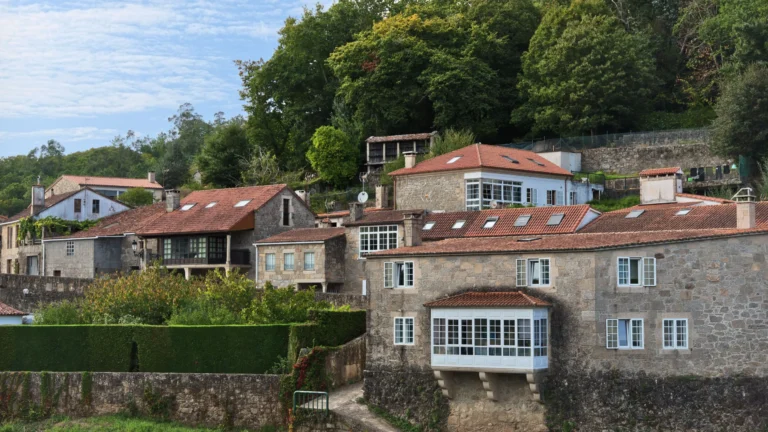
Moving abroad is a huge undertaking. You’re not just building a new life in Spain, but also tying up loose ends in the Netherlands. From selling your house to cancelling all those subscriptions: there’s an awful lot to deal with.
We’d drawn up a step-by-step plan beforehand and, fortunately, most things went smoothly. Still, looking back, there are five things we’d now handle very differently. Make the most of this advice if you’re planning a move too!
One reason we had relatively few surprises was that we prepared extensively before leaving. We read virtually everything we could find online about moving to Galicia and worked through the process step by step. That preparation helped, but it also taught us something important: knowing what needs to be done is not the same as knowing the easiest way to get it done. Spanish bureaucracy can be difficult to navigate on your own, especially when you don’t speak much Spanish. In our experience, the right order matters, and professional help can save a lot of frustration when you are dealing with unfamiliar procedures.

1. Don’t plan your move for winter
We moved in January, but we’d never do that again. We’d underestimated just how cold Spanish houses can be in winter. Sometimes it was only 3 degrees inside in the morning! We did have some wood, but nowhere near enough for those first few weeks. Because we were also trying to heat the house with the air conditioning, the costs for electricity and wood really added up. Tip: It’s better to move in the spring, so you have time to get your house ready for winter. If you are still comparing areas before the move, start with our guide to the best places to live in Galicia.
2. Be aware of the ‘power limit’ (Potencia)
In the Netherlands, you can switch on appliances almost without limit, but in Spain it works differently. You agree a maximum power limit with your energy supplier. We didn’t know that and started with a low-power contract. The result? As soon as the washing machine and an air conditioner were switched on, the power cut out. It’s sorted now, but it would have been a lot easier if we’d looked into this beforehand.
3. The language: Apps aren’t enough
We thought we were well prepared. And we were, compared with what we had expected, but apps and translation tools only take you so far. You need to make the effort to speak some Spanish and to go and ask how things work. We found that most problems could be dealt with by simply getting in the car and going to the relevant place, rather than trying to solve everything remotely.
Preparation helps enormously, but real life starts when you stop reading about it and go and ask.
For anyone moving to rural Galicia, a car is also far more important than it might be in a Spanish city. Where we live in the Ribeira Sacra, we simply couldn’t manage daily life without one.
\\