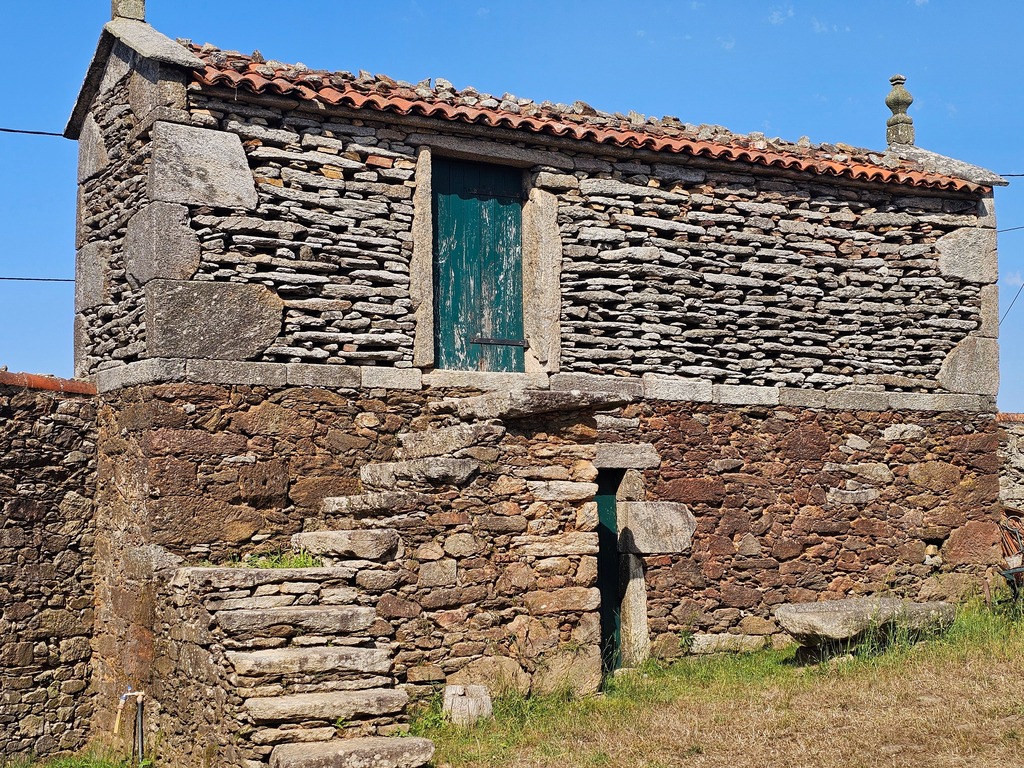
Within sight of our own house stand three hórreos, none of them still in use. One has been left to fall apart quietly, its wooden slats sagging and half open to the weather. The other two have clearly been cared for, repointed stonework, intact roofs, the kind of upkeep that suggests someone still feels responsible for them even though nothing has been stored inside for years. It’s a small thing, but it says something about how people here relate to structures that have outlived their original purpose. Some get left to the elements, others get quietly maintained out of what looks like respect rather than necessity.
A hórreo, for anyone who hasn’t come across the term yet, is a raised granary built to store corn and grain above the ground, out of reach of rats and mice and away from the damp that would otherwise ruin a harvest through a Galician winter. The design is simple but effective: stone or wooden slats for ventilation, set on pillars, with flat stone discs partway up each pillar specifically to stop rodents climbing further. Many are topped with a small cross or stone finial, a detail from an era when that kind of thing was added to almost any substantial structure. The oldest depictions go back to the twelfth century Cantigas de Santa María, and some historians trace the basic concept even further, to raised granaries used before the Romans arrived in the region. The oldest hórreos still standing today date to the fifteenth century, and people still occasionally build new ones.
What we hadn’t quite appreciated before living here is just how personal these structures are. Every hórreo we’ve come across belongs to a specific house, usually standing close beside it, and the condition of each one seems to track roughly with how attached the current owners are to their family’s history rather than any practical need. Nobody appears to be storing corn in them anymore, not around us at least, but that doesn’t mean they’re simply abandoned. The well-kept ones especially feel less like functional buildings and more like something closer to a family monument that happens to have started life as a granary.