One of the first things people ask us, once they hear where we live now, is whether it’s actually cheaper here than back home. The honest answer is that it depends entirely on which part of the budget you’re looking at, and that some of the savings show up in places you wouldn’t necessarily expect.
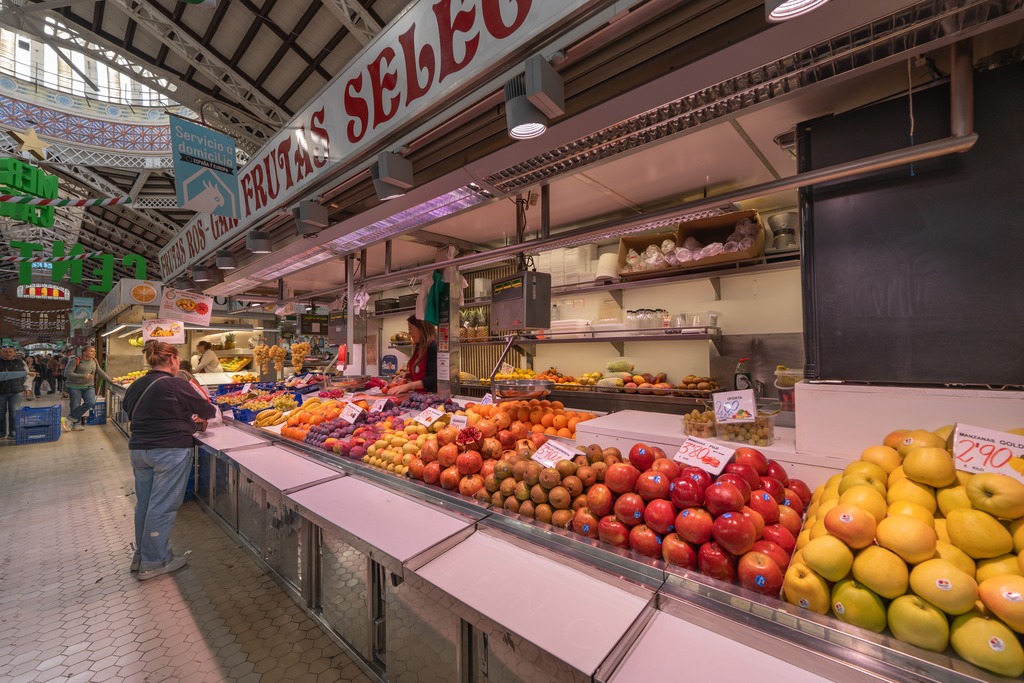
Groceries, for us, have turned out to be roughly on par with what we paid in the Netherlands. We haven’t noticed a dramatic difference standing at the till, and if anything the local produce here tends to be fresher for the same price rather than simply cheaper. Where the difference becomes obvious is eating out. A menu del dia, the fixed three course lunch menu that most restaurants offer here, comes in at a fraction of what a comparable meal would cost us at home. It reminds us of something we used to do back in the Netherlands, which was drive across the border into Germany just to eat out at a reasonable price, because Dutch restaurant prices had gotten to a point where eating out locally rarely felt worth it. Here we don’t need to cross a border for that. A proper sit down lunch is simply affordable as a matter of course.
Beyond our own experience, the broader picture for Galicia backs this up. Regional cost of living data puts Galicia among the more affordable parts of Spain, itself already one of the cheaper countries in Western Europe to live comfortably in. Estimates for a single person’s monthly budget in Galicia, including rent, tend to fall somewhere in the range of one thousand to under two thousand euros depending on lifestyle, with couples typically landing somewhere between fifteen hundred and two and a half thousand euros a month. Lugo province specifically has been cited as sitting comfortably below the Spanish national average for cost of living, which tracks with what we see around us: modest rents, reasonable utility bills, and restaurant prices that would be considered a bargain almost anywhere north of the Pyrenees.
Fuel is another area where the difference has been hard to ignore. At the time of writing, a litre of petrol here costs around a euro less than what we’d expect to pay for the same litre in the Netherlands. Given how much driving rural life out here involves, that gap adds up quickly over a month, and it’s one of those costs that quietly offsets a car being close to a necessity rather than a choice.
Property tax is the other place where the contrast has genuinely surprised us. The IBI, Spain’s annual property tax and the rough equivalent of the Dutch OZB, works out to something like twenty times less than what we used to pay back home for a comparable property, where the OZB ran to more than a thousand euros a year. It’s the kind of fixed yearly cost that barely registers here, where in the Netherlands it was simply an accepted part of owning a home.
None of this means everything here is automatically cheap. Imported products, anything not locally produced, can cost noticeably more than the everyday staples, and a car remains close to a necessity out here in a way it might not be in a Spanish city with decent public transport. But for the two of us, the combination of groceries that don’t cost more than we’re used to, restaurant meals that genuinely don’t, cheaper fuel to get around on, and a property tax bill we barely notice, has made a real difference to how often we simply go out and enjoy ourselves without thinking twice about the bill. If you are weighing that cost of living against different parts of Galicia, our guide to the best places to live in Galicia is the natural next step.