That headline is not clickbait. It’s a genuine warning, and one we wish someone had given us before we started looking at old stone houses tucked into the hills of Ribeira Sacra. We did end up buying, and we don’t regret it. But we came within a hair’s breadth of making a decision we would have regretted for years, and we’ve since met some other newcomers making the same mistakes to know it’s worth saying out loud: for a lot of people, buying a house in Galicia is the wrong move.
Here’s why, and how to know if you’re the exception.
The Photos Are Lying to You
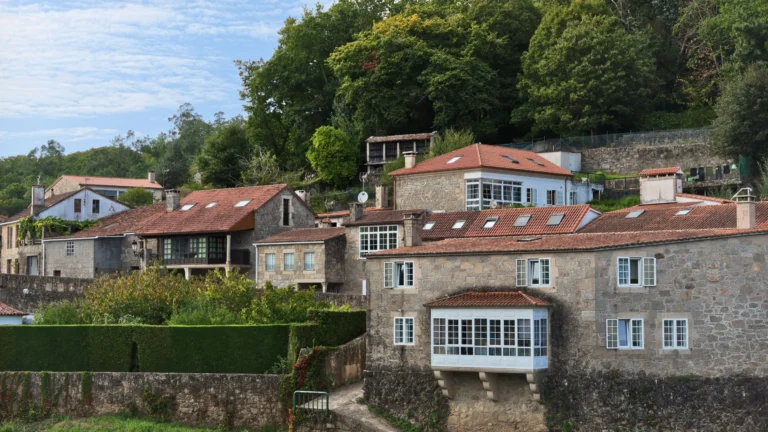
Every listing for a granite farmhouse with slate roofs, a horreo out back, and mist rolling over eucalyptus-covered hills looks like a dream. It photographs beautifully in every season. What the photos don’t show is the electrical wiring from three renovations ago, the septic system that was never installed to code, or the fact that half the land in the deed is technically suelo rústico, which severely limits what you’re legally allowed to build or even repair.
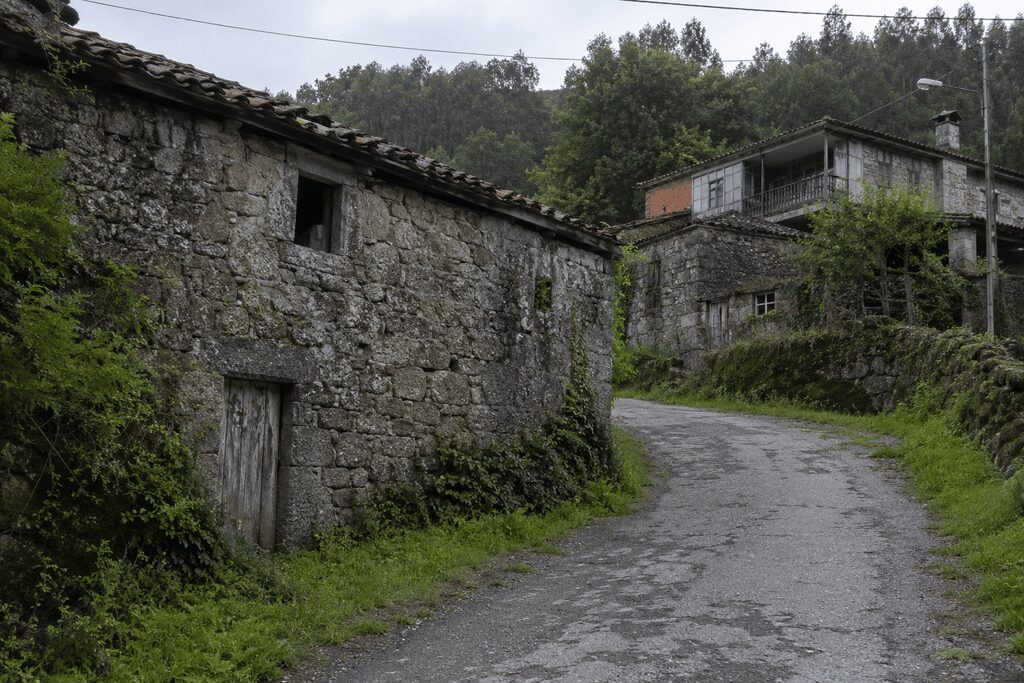
Galicia has an enormous stock of aldea houses sitting empty because the last generation left for the cities or emigrated abroad decades ago. Many of these houses have been unoccupied for ten, twenty, sometimes thirty years. Structurally sound stone doesn’t mean structurally sound roof, plumbing, or foundation. A house can look solid and still need a full gut renovation before it’s livable.
You Are Not Buying a House. You Are Buying a Project.
This is the single biggest miscalculation we see. People budget for the purchase price and assume renovation will be “some extra costs.” In reality, for a lot of these older rural properties, the renovation budget dwarfs the purchase price. Our guide to what to check before renovating a Galician stone house goes into the structural issues that can drive those costs. A €40,000 house can easily need €120,000 in work once you factor in new roofing, rewiring, insulation (most old Galician houses have none), plumbing, and bringing water and electricity connections up to a usable standard.
If you are not personally handy, don’t have a trusted local network of builders, and aren’t prepared to manage a renovation from a country where you don’t yet speak the language fluently, this is where dreams go to die slowly and expensively.
Rural Infrastructure Is Not Optional Reading
Before you fall in love with a property, you need real answers to unglamorous questions:
- Is there a legal, permitted water source, or does the house rely on an old spring connection that may not be registered?
- What’s the actual state of the electrical grid to that specific house? Power cuts are common in rural Galicia, and some villages are at the very end of the line.
- Is the access road public and maintained, or is it a private track that six neighbors have an unwritten agreement about?
- Does the property have any legal encumbrances, unregistered boundaries, or inheritance disputes tied to it? Rural Galician land has often been split among siblings for generations without ever being formally resolved on paper.
None of these show up in a nice listing. All of them can turn a bargain into a nightmare.
The Isolation Is Real, Not Romantic
There’s a specific kind of person who thrives in a fifteen-person village at the end of a valley, and a specific kind of person who lasts about four months before the silence, the distance to a supermarket, and the absence of anyone their own age becomes unbearable. Rural Galicia is not a lifestyle you can test from a week’s holiday rental in July, when the sun is out and every village fiesta is in full swing. Winter is a different country. Short days, constant rain, wood heating that needs to be fed daily, and roads that empty out entirely after 8pm.
If your mental image of this life comes from a two-week summer trip, you don’t yet have the information you need to make this decision.
What “Buying the Wrong Reasons” Looks Like
We’ve written before about romanticized expectations of rural Galician life, and buying a house is where that romanticism gets expensive. The warning signs we’d flag in others:
- Wanting to “escape” something (a job, a relationship, a country’s politics) rather than moving toward something specific
- Never having spent a full winter in the region before committing
- Assuming the language barrier will resolve itself “naturally” once you’re there
- Underestimating how much of daily life in a small village runs on personal relationships and trust built over years, not money
None of these are disqualifying on their own. Together, they’re a pattern we’ve watched play out with other newcomers who bought fast and left within two years, house half-renovated and unsellable at the price they paid.
So When Does It Make Sense?
It makes sense when you’ve spent real time in the region across different seasons, when you have either the skills or the budget (and it’s usually a bigger budget than you think) to handle a serious renovation, when you’ve had a local lawyer independently check the property’s legal status rather than trusting the seller’s paperwork, and when your reasons for moving are about what you’re moving toward, not what you’re running from.
If that’s you, Galicia can genuinely be one of the best decisions you’ll make. The land, the food, the pace of life, the sense of being somewhere real rather than a postcard version of rural Europe it’s not an exaggeration. We’re glad we did it.
But go in with your eyes open. Don’t buy a house in Galicia because the photos are beautiful. Buy one because you’ve done the unglamorous homework and you still want it anyway.