

Is Galicia a Blue Zone?
We first heard the term “blue zone” applied to Galicia on a boat trip along the Miño, through the Lugo stretch of the Ribeira Sacra. The guide was pointing out villages along the bank and mentioned, almost as an aside, that Ourense, just downriver, had some of the oldest people in Spain, that researchers were studying the area, that there was even talk of an official designation one day. It sounded like the sort of thing a guide says to keep a boat full of tourists interested. It wasn’t until we looked into it properly, back home, that we realised he hadn’t been exaggerating.
Galicia is not, officially, one of the world’s five recognised blue zones. That list is still Okinawa, Sardinia, Ikaria, Nicoya and Loma Linda, and it hasn’t changed in years. But the province we live closest to, Ourense, has become the focus of genuine scientific interest for exactly the same reasons those five places made the list in the first place. A study using Spanish and Galician statistical institute data found that Galicia has the second highest concentration of centenarians of any Spanish region, with Ourense, alongside Soria, at the very top of the national ranking. The researchers were careful with their language, but the conclusion was direct: rates here are comparable to those found in recognised blue zones.
What struck us most, reading through the research, was the geography of it. The concentration isn’t evenly spread across Galicia. It’s the inland, rural areas, the eastern part of Pontevedra, the south of Lugo, and Ourense province, that carry the numbers, while the coastal provinces sit noticeably lower. That matches what we see around us here in the Ribeira Sacra. This is inland Galicia, hills and river valleys rather than coastline, closer in character to the Ourense heartland than to the beach towns further west. The people who reach their late nineties and beyond in this part of the world are, overwhelmingly, from villages like ours rather than from A Coruña or Vigo.
There’s a specific area getting most of the attention: Terra de Celanova, a cluster of villages in Ourense with around 5,500 residents and 56 confirmed centenarians between them. A nonprofit called Ourensividad has been working with the Xunta de Galicia to build the case for Galicia to become the sixth officially recognised blue zone. It’s slow, careful work, the kind that involves going door to door, verifying ages against records, and trying to isolate what’s actually driving the numbers rather than just noting that they’re high.
The explanations on offer are familiar if you’ve read anything about the other blue zones, and they’re also just an accurate description of daily life here. People eat what they grow. The diet leans on greens, potatoes, dairy, pork and the kind of fish that comes from a coast twenty minutes away rather than a supermarket freezer. Almost nobody we’ve met past a certain age has ever really stopped working. Our neighbour with the chickens isn’t managing her land as exercise; it’s just what having land means. And the social side matters more than we expected before we moved here. People are rarely alone. Someone is always stopping by, checking in, bringing something round. It’s not a wellness routine, it’s just how the village functions.
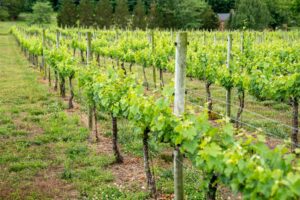
Whether Galicia ever gets the formal blue zone designation is really a question for demographers and the Xunta’s public health researchers, not for us. But living here, the pattern the studies describe isn’t abstract. It’s the woman on the hill, it’s the man who still tends his vines above the river gorge, it’s the number of people in their late eighties and nineties we’ve met in our first months here who are, by any normal standard, thoroughly independent. Ourense may or may not join Okinawa and Sardinia on an official list one day. In the meantime, we’re fairly content living in whatever this place turns out to be called.