Most visitors to Galicia head straight for the coast or for Santiago de Compostela, which means Ourense often gets skipped entirely. That’s a shame, because Ourense is one of the few cities in Europe where hot mineral water still rises straight out of the ground in the middle of the historic centre, and where Roman history sits a few steps from a modern café terrace.
A City Built Around Its Water
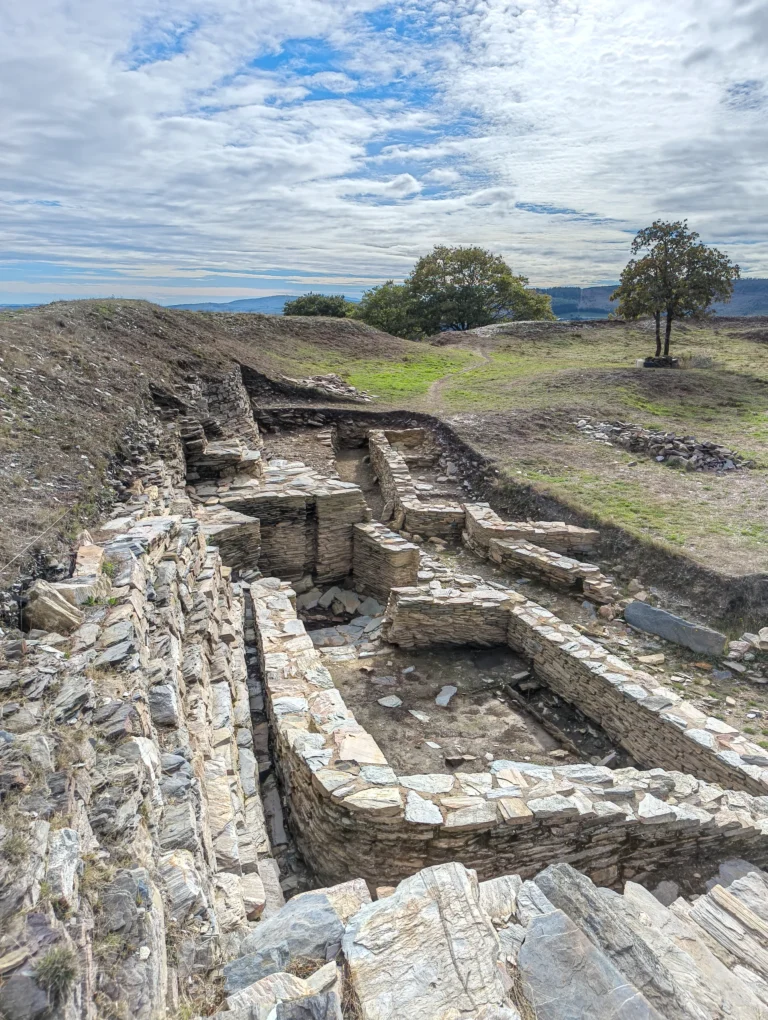
Long before Ourense was a city, it was a spring. The Romans settled here, drawn by the natural thermal waters bubbling up at what’s now known as As Burgas, and built pools and a small sanctuary around them. Some accounts trace the very name of the city back to those waters and to the gold once mined nearby. What’s remarkable is that this isn’t a piece of history you have to imagine: the water is still flowing today, at more than 60 degrees Celsius, in the same spot people have been using it for roughly two thousand years.
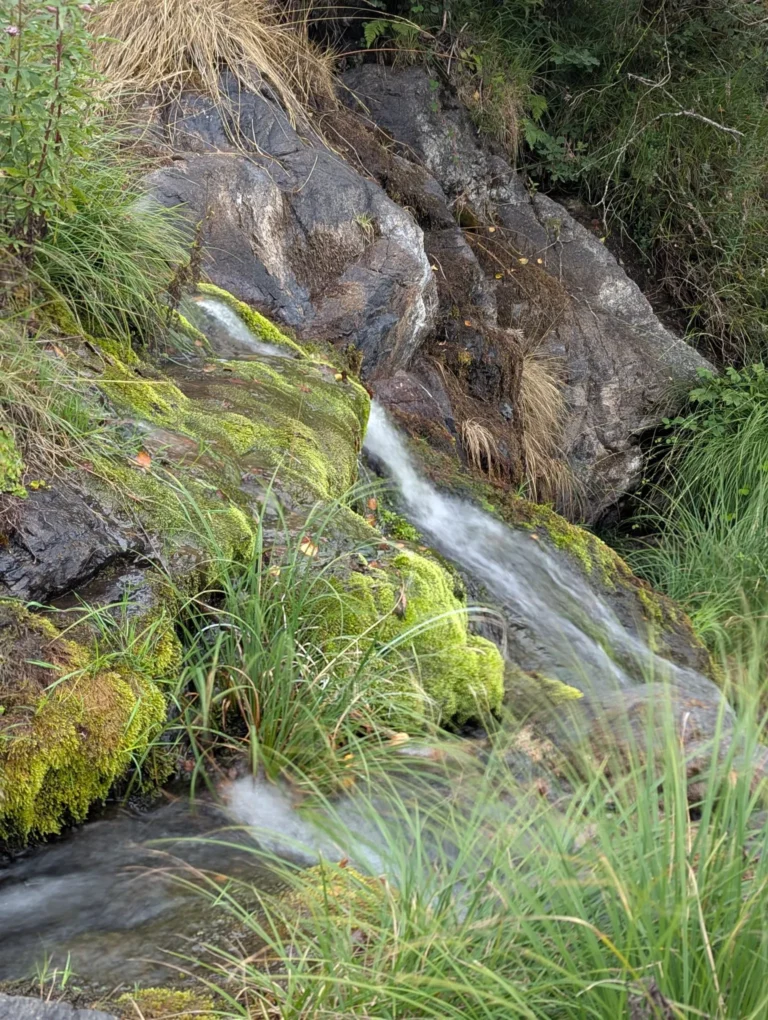
Ourense has leaned fully into this identity. It now carries the informal title of thermal capital of Galicia, and the springs feeding the city produce millions of litres of hot water every single day. Alongside the historic As Burgas fountains in the old town, modern riverside baths like Outariz and A Chavasqueira let you sit in warm water with the Miño river running past you, which is a strange and very Galician way to spend an afternoon.
The Old Bridge and the Old Town
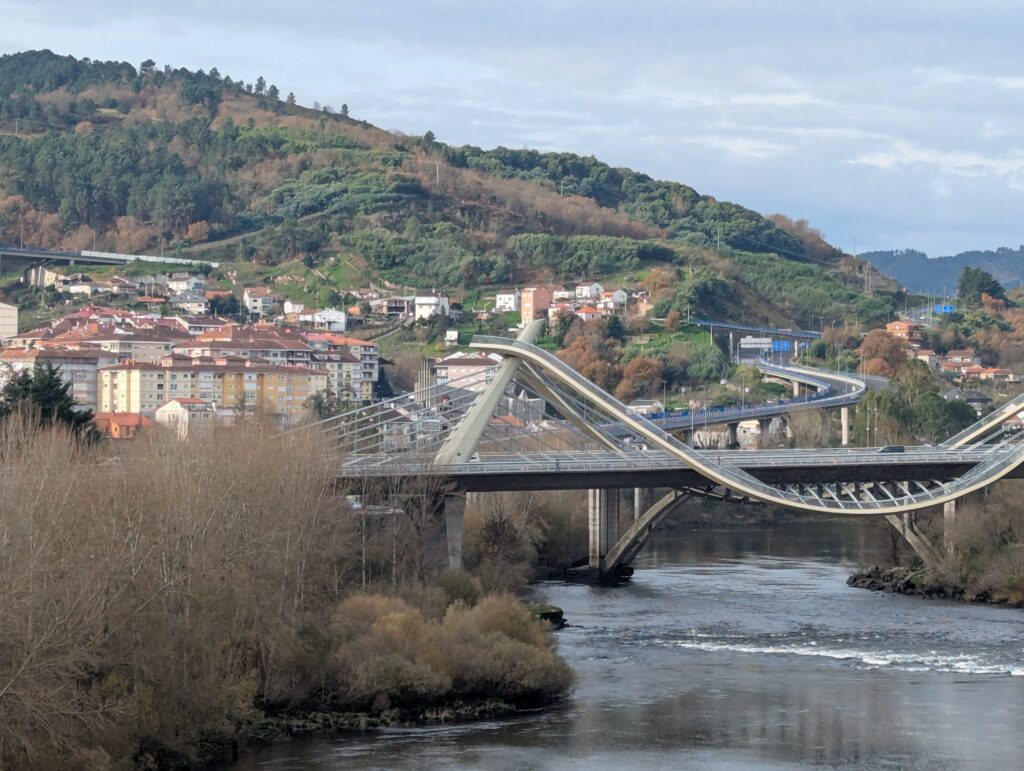
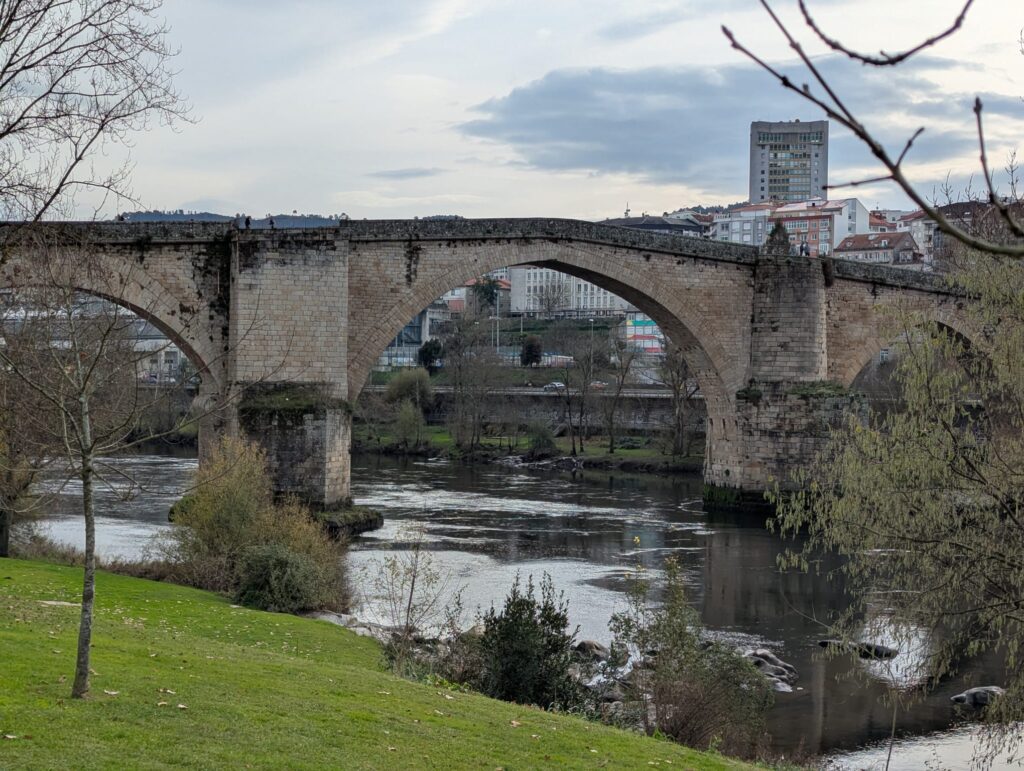
The Ponte Vella, or Old Bridge, is the other symbol of the city. It was originally built in the first century and has been rebuilt and reinforced several times since, most notably in the twelfth, thirteenth, and seventeenth centuries. It still crosses the Miño today, and it’s one of the few visible reminders that Ourense was once a Roman settlement called Auria.
The old town spreads out from there in narrow streets and small squares, each with its own name and character: Praza Maior, Praza do Ferro, Praza do Trigo. It’s a compact centre, easy to walk in an afternoon, with the cathedral as its clear anchor point. The cathedral itself dates back to the twelfth century and blends Romanesque and Gothic styles, with a richly carved portico that’s often compared to the more famous one in Santiago.
More Than a Stopover on the Camino
Ourense also plays a specific role for pilgrims: it marks the start of the final hundred kilometres of the Via de la Plata route to Santiago, which makes it a common starting point for walkers who want to complete the minimum distance for a Compostela certificate. But treating it purely as a Camino checkpoint undersells the city. It has its own calendar of festivals worth knowing about, from Os Maios in early May, rooted in pre-Roman spring traditions, to Magosto in November, when chestnuts are roasted in the main square in a tradition familiar from the rest of rural Galicia.
Why It’s Worth the Detour
Ourense doesn’t try to be picturesque in the same postcard way as the coast. It’s a working provincial capital, and that’s part of its appeal. You get Roman history you can actually touch, water that’s been used for the same purpose for two thousand years, and an old town that hasn’t been reshaped for tourism. For anyone exploring inland Galicia, or driving between the coast and Ribeira Sacra, it’s an easy detour that rewards more time than most people give it.
The Terraces of Ourense’s Old Town
Ourense’s Casco Vello is a city built for sitting still. Between the narrow stone streets and the arcaded squares, terrace culture here isn’t an afterthought bolted onto tourism it grows directly out of centuries of markets, guilds, and gatherings that happened in these same open spaces.
Praza Maior
The natural starting point is Praza Maior, the historic heart of the old town. What sets it apart from most Spanish plazas mayores is its sloped floor, a quirk that only adds to its charm. Three sides of the square form the Espolón, today lined with terraces beneath 18th- and 19th-century façades, with the Casa Consistorial and the old Episcopal Palace looking on. It’s an easy place to simply arrive, order something, and watch the square do its work.
Praza do Ferro
A few narrow streets away sits Praza do Ferro, smaller and more intimate. The square takes its name from the ironmongery and farm tools once traded here, and its centrepiece is a fountain that originally decorated the cloister of the San Esteban de Ribas de Sil monastery. Shaded by the surrounding buildings and framed by 15th-century arcades, it’s one of the more sheltered spots to sit with a coffee or a glass of wine, and it also marks the entrance to Os Viños, Ourense’s traditional tapas district.
Praza do Trigo and Os Viños
Right next to the cathedral, Praza do Trigo carries the quieter atmosphere of an old grain market, arcaded and stone-faced, and works well as a calmer counterpoint before or after the crowds around the cathedral. From there, the tangle of alleys leading toward Os Viños is where the terrace culture turns into something more food-focused: this is the tapas quarter proper, tied to Galicia’s wine tradition and its four designations of origin Ribeiro, Valdeorras, Ribeira Sacra, and Monterrei.
Beyond the old town
Terrace life in Ourense isn’t confined to the historic squares. Along the Miño in the Oira district, terraces look out over the river, a natural stop after a walk along the riverside path or a visit to the city’s thermal baths. Around the Xardín do Posío, a newer, younger scene of café terraces has taken hold, popular with a different crowd than the medieval squares draw.