The name Ribeira Sacra means “sacred riverbank,” and once you’ve driven along the Sil or Miño canyons for a while, the name stops feeling like marketing. Monks and hermits settled in these hills between the 9th and 13th centuries, often in spots that are still hard to reach today. Some of those monasteries are now in ruins, some have been turned into hotels, and one is still home to a small community of nuns. We’ve visited most of them over the past months, and this guide is meant to save you the trial and error we went through: which ones are worth the drive, which need advance booking, and which you can wander into on a whim.
San Pedro de Rocas: the oldest monastery in Galicia
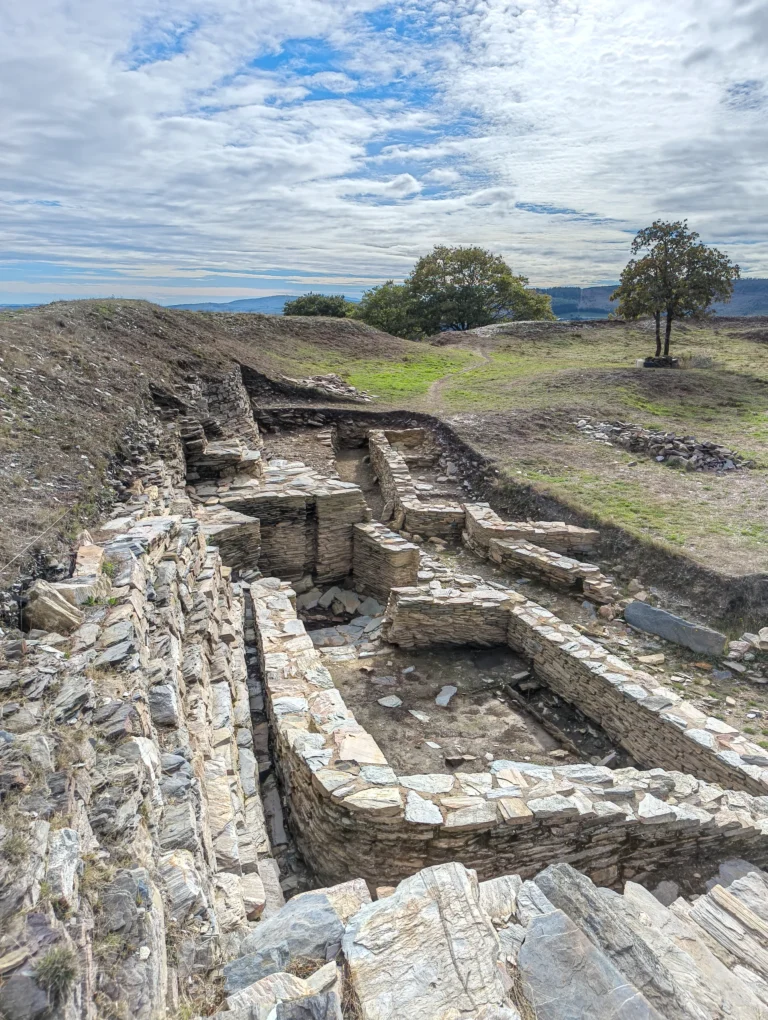
This is the place to start if you want context before seeing the rest. San Pedro de Rocas sits in the town of Esgos and is carved directly into the rock, with parts dating back to the 6th century. A small visitor center on site explains the monastic history of the region, which makes it a useful first stop rather than an afterthought. The road up is narrow and parking is limited on busy days, so we’d recommend arriving earlier rather than later, especially in high season.
Santo Estevo de Ribas de Sil: now a Parador, still worth the detour
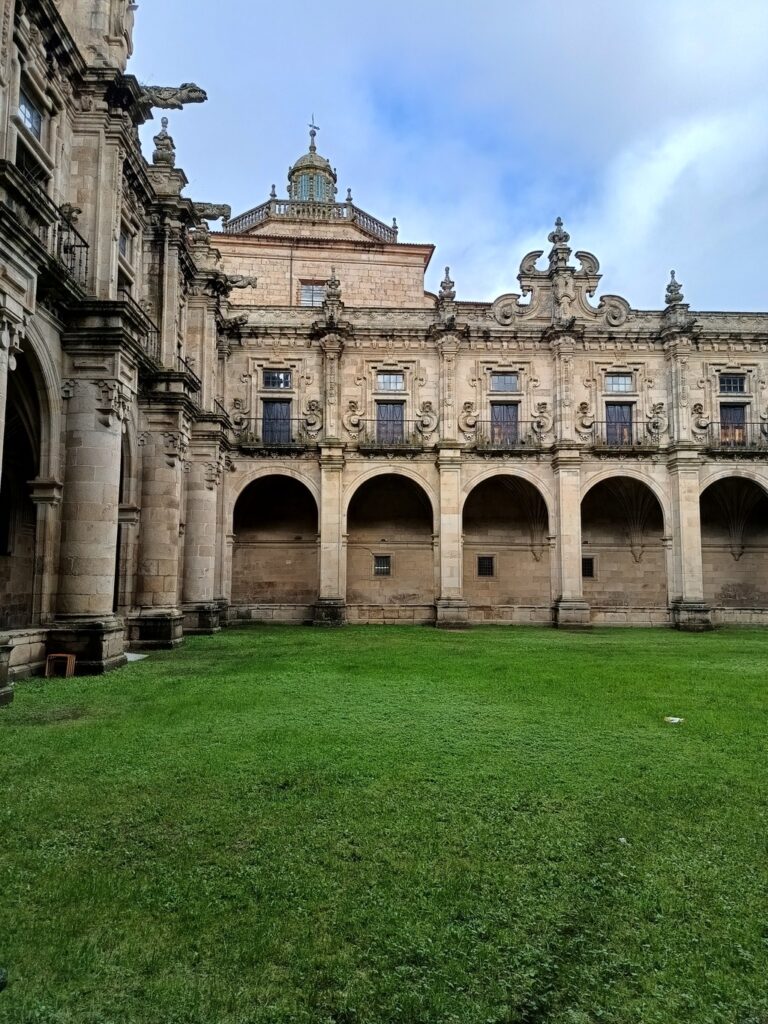
This is the largest and most architecturally imposing monastery in Ribeira Sacra, and it’s now run as a Parador hotel. You don’t need to be a guest to visit: the cloisters and public areas are open to anyone stopping for a coffee or lunch at the restaurant. If you only have time for one grand monastery, this is probably it. Just know that the church itself keeps separate, more limited hours than the hotel, so if visiting the religious space matters to you, check before you plan your day around it.
San Vicente do Pino: Monforte’s Parador with a view
Also part of the Parador network, San Vicente do Pino sits on the highest point in Monforte de Lemos, which means the views over the town alone are worth the stop. It’s part of a larger complex that includes the old castle keep and the Casa Condal, so it pairs naturally with an afternoon spent walking around Monforte rather than being a standalone destination.
Convento de San Salvador de Ferreira de Pantón: the one still in use
Also known as Las Bernardas, this is currently the only monastery in Ribeira Sacra where monastic life is still active. A small community of nuns lives here, and part of the visit involves a nun unlocking the church and cloister for you rather than a standard ticket booth. It’s a different kind of experience from the others precisely because it isn’t a museum piece. Bring cash if you want to buy the cookies they make and sell on site; it’s a small thing, but it’s also the closest you’ll get to feeling the daily rhythm of the place rather than just its history.
: book ahead
These two Cistercian monasteries are close enough to visit on the same trip, and both require advance reservations if you want to see the interior. Espadanedo is also closed on Tuesdays, which catches people out more often than you’d expect. We’d suggest booking through the official Ribeira Sacra tourism reservation system a few days ahead, especially in summer when guided slots fill up. Turning up without a booking usually means you’ll only see the exterior, which is still worth it, but not the full experience.
How to plan your visit: one day or two
If you’re only in the area for a day, we’d prioritize San Pedro de Rocas for context, Santo Estevo de Ribas de Sil for scale, and Las Bernardas if you want to see a monastery that’s still lived in rather than preserved behind glass. Trying to fit in all six in a single day is possible on paper, but the roads through this landscape are narrow, hilly, and slower than they look on a map. We drive these roads regularly and still allow more time between stops than we think we’ll need. Two days, split roughly between the Ourense side and the Lugo side, gives you room to actually stop at the viewpoints along the way instead of just passing them.
Booking and practical info
- San Pedro de Rocas: no booking required, small entry fee, visitor center on site.
- Santo Estevo de Ribas de Sil: public areas open to non-guests; church hours are separate from hotel hours.
- San Vicente do Pino: open to non-guests; best combined with a walk through Monforte de Lemos.
- Las Bernardas (Ferreira de Pantón): entry via a resident nun; cash recommended for the cookies.
- Santa María de Montederramo: advance booking required for the interior.
- Santa María de Xunqueira de Espadanedo: advance booking recommended; closed on Tuesdays.
Bookings for the Cistercian monasteries can be made through the official Ribeira Sacra tourism reservation system, and it’s worth doing this a few days ahead if you’re visiting between June and September.