

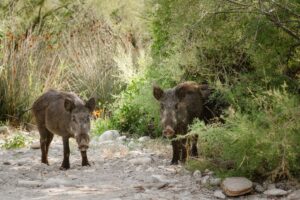
The Mysterious Bangs at Night
The first few nights we heard it, we assumed someone was out hunting. A sharp bang, somewhere out over the fields, repeating every so often through the dark. It felt strange for that time of night, and we found ourselves wondering who would be hunting at that hour, and why so regularly. It took a while before we found out what was actually going on: those bangs are not gunshots at all. They come from devices designed specifically to keep wild boar out of the crops.
What’s actually making the noise
The devices are commonly known in Spanish as cañones espantapájaros, gas cannons that run on butane or propane and produce a loud bang at set intervals, anywhere from once a minute to once every half hour, depending on how the farmer has it set. The sound is deliberately built to resemble a gunshot. That’s the whole point: wild animals associate the noise with danger and a human presence nearby, and stay away from the field as a result.
While the name translates to “bird scarers,” in practice these cannons are used against a much wider range of animals, including wild boar, roe deer, and other wildlife that can damage crops. Given how common wild boar are in this part of Galicia, and how much damage they can do to a field overnight, it makes complete sense that farmers here lean on them.
Why it’s so effective (and so loud)
The volume is adjustable, typically somewhere between 80 and 120 decibels, and each unit covers roughly 3 to 5 hectares. Out here in the countryside, with little else to absorb or block the sound, that’s more than enough to carry a long way, especially at night when everything else has gone quiet.
Some devices run continuously through the night, which has led to noise complaints and calls for regulation in other parts of Spain, from Andalusia to the Basque Country. We haven’t looked into whether Galicia has specific rules around usage hours, but it’s clear the noise is a real point of friction elsewhere too.
A small detail that says a lot about rural life here
It’s a small thing, but it’s exactly the kind of detail nobody warns you about before you move to the countryside. City life prepares you for traffic noise, construction, sirens. It doesn’t prepare you for a gas cannon going off at 2am to protect somebody’s vineyard from wild boar. Once you know what it is, though, it stops being unsettling and starts being just another part of how the rhythm of rural Galicia works: crops on one side, wildlife on the other, and farmers doing what they can to keep the balance in their favour.