
What UNESCO Status Would Mean for the Ribeira Sacra
Sometime in the last week of July, in Busan, South Korea, a committee we will never meet decides something that could change the place we live. The Ribeira Sacra Waterscape, the terraced vineyards, the river canyons, the monasteries carved into impossible slopes, is one of thirty sites up for UNESCO World Heritage inscription this year, and the dossier gets its formal hearing between the 24th and 26th. This is not a new attempt. The candidacy has been building since 2019, and it survived an earlier stumble in 2021, when Spain asked for it to be pulled from evaluation rather than risk a rejection, usually a sign the paperwork wasn’t strong enough yet. Whatever the outcome this time, it felt worth laying out honestly what World Heritage status would and wouldn’t do for a region we now call home.
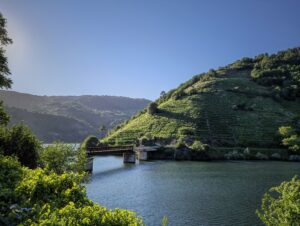
The case for it is straightforward, and we don’t think it’s wrong. This landscape earned its nomination on what UNESCO calls “heroic viticulture,” vineyards planted on slopes so steep that machinery is often useless and grapes still get harvested the way they have been for centuries, by hand, on terraces cut into rock above the Sil and Miño rivers. Recognition at that level tends to bring real, measurable tourism growth, and for a region that has spent a hundred and fifty years losing people to emigration, a credible reason for outsiders to come and spend money is not nothing. Status usually unlocks funding too, for restoring monasteries, for road and trail infrastructure, for the kind of conservation work that a landscape this fragile genuinely needs. And there’s something less tangible but still real in it: a place that has mostly been known, if it’s known at all, for what people left behind, getting formally told that what remains is worth protecting.
The case against it is less often said out loud, but it’s not hard to find if you look at what happened elsewhere. Santiago de Compostela and the Alhambra are both proof that World Heritage status can bring exactly the kind of tourism a fragile place can’t absorb: more visitors than the roads, the parking, and the quiet were built for, arriving faster than the infrastructure can catch up. A landscape valued precisely for its emptiness and its slow pace is not obviously improved by a spike in coach tours. Property prices tend to move too, and in a region already stretched thin between locals and newcomers, that’s a real cost, not a hypothetical one. Protected status also means protected rules: stricter limits on renovation, construction, and land use, which sounds reasonable in the abstract but lands as extra paperwork and extra cost on the people who actually live here and maintain the terraces UNESCO wants to preserve.
We don’t have a strong prediction either way, and given the 2021 hesitation, we wouldn’t be surprised by another setback. What we do think is worth saying is that “UNESCO status” is not automatically good news for a place, even when it sounds like unambiguous good news from the outside. It is a trade: visibility and funding on one side, pressure and cost on the other, and which way that trade nets out depends entirely on how carefully a region manages the years that follow, not on the ceremony in Busan itself. We’ll be watching the outcome the same way most of our neighbours will: with interest, but without assuming we already know whether it’s good news.